Drlogy
Healthcare organization
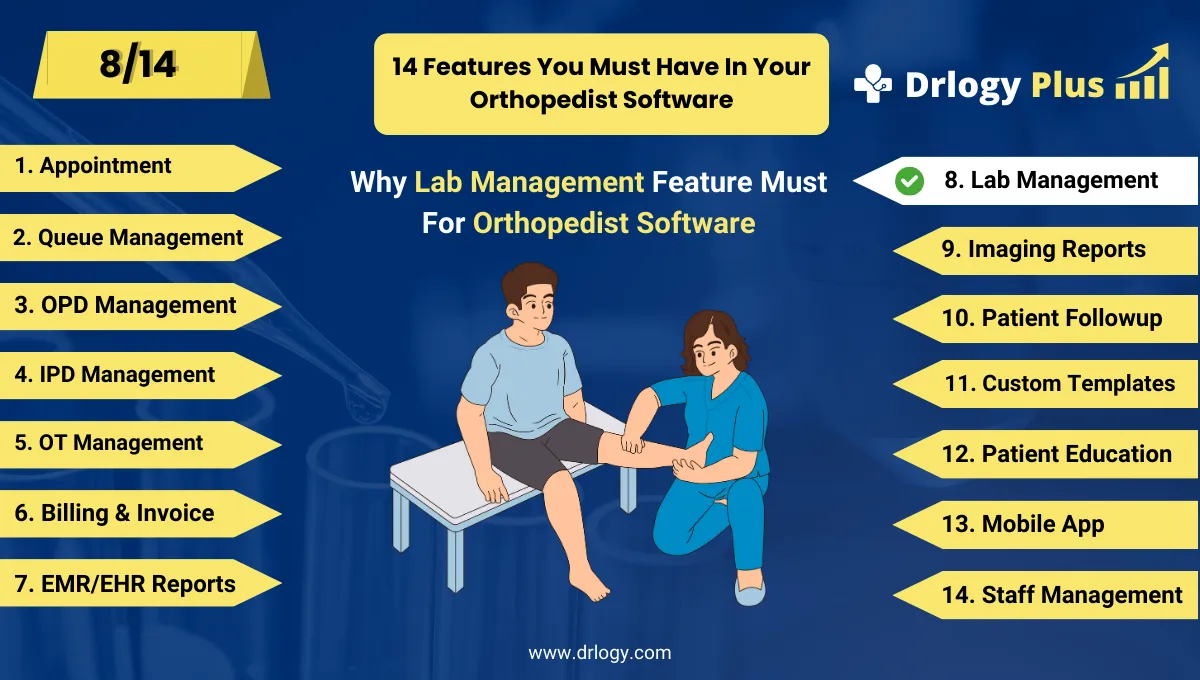
How Lab Management Integrates Into Orthopedist Software
Orthopedic care often relies on lab tests to evaluate infections, inflammation, bone health, and post-surgical recovery.
Check:
Best Orthopedist Software For Orthopedic Clinics & Hospitals
The Lab Management feature in orthopedist software helps streamline test ordering, result tracking, and diagnostic accuracy—making it easier for orthopedic specialists to deliver timely, evidence-based care.
10 Ways Lab Management Feature Aids Orthopedist Software
Here are 10 Ways Lab Management Feature Aids Orthopedist Software.
1. Simplifies Test Ordering from Patient Records
- Orthopedists can request tests like CBC, CRP, calcium, or vitamin Dectly from the EMR.
- Predefined lab panels for arthritis, bone density, or pre-op evaluation save time.
- Eliminates paperwork and manual requisitions.
- Automatically links test requests to patient profiles.
- Enhances workflow speed.
Digital lab ordering reduces errors and saves time during orthopedic consultations.
2. Reduces Manual Entry Errors
- Automated data input from lab equipment or technicians ensures result accuracy.
- Reduces misreporting of values for critical tests like ESR or clotting profiles.
- Helps prevent misdiagnosis or treatment delays.
- Improves overall data integrity.
- Increases trust in diagnostics.
Accurate lab results support safer, more confident orthopedic decisions.
3. Tracks Inflammation and Infection Markers
- Monitors markers like CRP, ESR, WBC count for surgical infections, fractures, or arthritis.
- Helps in early detection of post-op complications.
- Supports treatment adjustments based on lab trends.
- Crucial for chronic inflammatory conditions.
- Aids long-term condition monitoring.
Lab tracking is essential for managing inflammation and recovery in orthopedic care.
4. Enables Quick Report Access and Sharing
- Lab results are stored in the patient’s record and accessible in real time.
- Reports can be viewed on desktop, tablet, or mobile.
- Easy to share with patients, specialists, or insurance.
- Reduces the wait for diagnostic decisions.
- Enhances convenience for all stakeholders.
Fast report access ensures timely orthopedic diagnosis and treatment planning.
5. Supports Pre-Operative and Post-Operative Testing
- Auto-suggests required tests before orthopedic surgeries (e.g., CBC, PT/INR).
- Tracks post-op markers like infection risk or hemoglobin recovery.
- Ensures patients are cleared and monitored before/after operations.
- Reduces surgical risks and readmissions.
- Improves surgical outcomes.
Lab management improves pre-surgical readiness and post-op safety.
6. Integrates with Billing for Transparent Charges
- Automatically logs charges for each lab test ordered.
- Generates lab-inclusive invoices and packages.
- Prevents underbilling or missed charges.
- Enhances revenue tracking and patient transparency.
- Reduces staff workload.
Integrated lab billing ensures revenue capture without manual intervention.
7. Customizes Orthopedic Test Panels
- Create disease-specific panels like bone metabolism, RA profile, or infection screening.
- Speeds up test selection during consultations.
- Ensures consistency in care across cases.
- Useful for both acute injuries and chronic bone conditions.
- Saves time and reduces variability.
Customized test panels improve diagnostic precision and clinical speed.
8. Improves Communication with Lab Technicians
- Central dashboard for lab orders, pending tests, and result uploads.
- Streamlines task assignments and follow-ups.
- Reduces missed or delayed investigations.
- Improves lab workflow visibility.
- Enhances team coordination.
Clear lab communication prevents bottlenecks and improves case turnaround time.
9. Facilitates Trend Analysis for Chronic Cases
- Enables comparison of test results over time for chronic orthopedic conditions.
- Helps evaluate progression in arthritis, osteomyelitis, or post-fracture healing.
- Generates graphs and reports for easy visualization.
- Supports long-term treatment adjustments.
- Builds a more personalized care approach.
Trend monitoring enhances long-term orthopedic care and outcomes.
10. Strengthens Patient Engagement and Transparency
- Patients can access reports via portal, email, or app.
- Encourages them to stay involved in their treatment journey.
- Reduces clinic footfall for report collection.
- Builds trust through clear communication.
- Improves satisfaction and loyalty.
Digital lab reporting keeps patients informed, engaged, and confident.
Drlogy Orthopedist Software Features
Here are 14 basic features for Drlogy Orthopedist Software.
Summary
Overall, The Lab Management feature in orthopedist software empowers orthopedic specialists to order, track, and interpret lab tests with speed and accuracy.
Check Drlogy Orthopedist Software Features Guide streamline Orthopedic clinic management, improve managing bone, joint, and trauma care, and enhance overall efficiency in Orthopedic practice.