The formula to calculate the volume of various three-dimensional shapes is as follows: 1. For a cube or rectangular prism: V = l × w × h, where "V" represents volume, "l" is the length, "w" is the width, and "h" is the height. The unit of volume can be cubic meters (m³), cubic centimeters (cm³), liters (L), etc., depending on the measurement system used.
2. For a cylinder: V = π × r² × h, where "V" is the volume, "π" is approximately 3.14159, "r" is the radius, and "h" is the height. The unit of volume can be cubic meters (m³), cubic centimeters (cm³), liters (L), etc.
3. For a cone: V = (1/3) × π × r² × h, where "V" is the volume, "π" is approximately 3.14159, "r" is the radius, and "h" is the height. The unit of volume can be cubic meters (m³), cubic centimeters (cm³), liters (L), etc.
4. For a sphere: V = (4/3) × π × r³, where "V" is the volume, and "r" is the radius. The unit of volume can be cubic meters (m³), cubic centimeters (cm³), liters (L), etc.
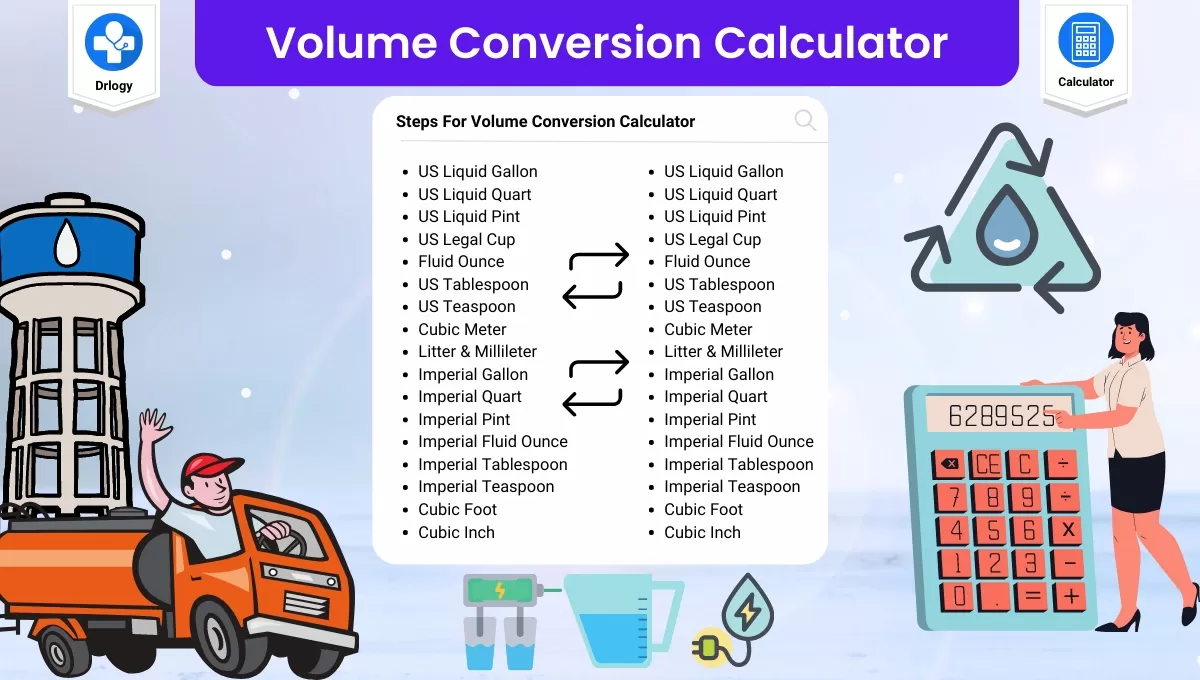
The unit of volume depends on the system of measurement used. In the International System of Units (SI), volume is commonly measured in cubic meters (m³) for larger quantities and cubic centimeters (cm³) or liters (L) for smaller quantities. In other systems, different units like gallons, cubic inches, or fluid ounces may be used for specific applications. Understanding the appropriate unit of volume is essential for accurate measurement and effective communication of quantities in various scientific, engineering, and everyday contexts.
 Drlogy