• Drlogy Plus

How do you calculate the cost of debt and the cost of equity?

To calculate the cost of debt, identify the prevailing interest rate on the company's debt, which represents the cost of borrowing. For the cost of equity, use the Capital Asset Pricing Model (CAPM) formula: Re = Rf + β * (Rm - Rf). Re represents the cost of equity, Rf is the risk-free rate, β is the stock's beta, Rm is the expected return of the market, and (Rm - Rf) is the market risk premium. These calculations determine the cost of debt and the cost of equity, which are combined to calculate the Weighted Average Cost of Capital (WACC).

FAQ

How is WACC a marginal cost?

WACC (Weighted Average Cost of Capital) can be considered a marginal cost in the context of capital budgeting and investment decisions. When a company evaluates a new investment project, it compares the project's expected return to the WACC. If the expected return on the project exceeds the WACC, the project is deemed viable as it generates returns higher than the average cost of financing. In this sense, WACC represents the minimum required rate of return that a project must achieve to create value for the company and its shareholders. Therefore, it serves as a marginal cost of capital, indicating the hurdle rate for accepting or rejecting investment opportunities.

What is the WACC discount formula?

The WACC (Weighted Average Cost of Capital) discount formula refers to using WACC as the discount rate in financial analysis, such as in Net Present Value (NPV) calculations. The formula for discounting future cash flows using WACC is: PV = CF1 / (1 + WACC)^1 + CF2 / (1 + WACC)^2 + ... + CFn / (1 + WACC)^n, where PV represents the present value of the cash flows, CF is the cash flow in each future period, and n is the number of periods. By applying the appropriate WACC as the discount rate, you can determine the present value of future cash flows and evaluate the financial viability of an investment project.

How do you calculate WACC on a calculator?

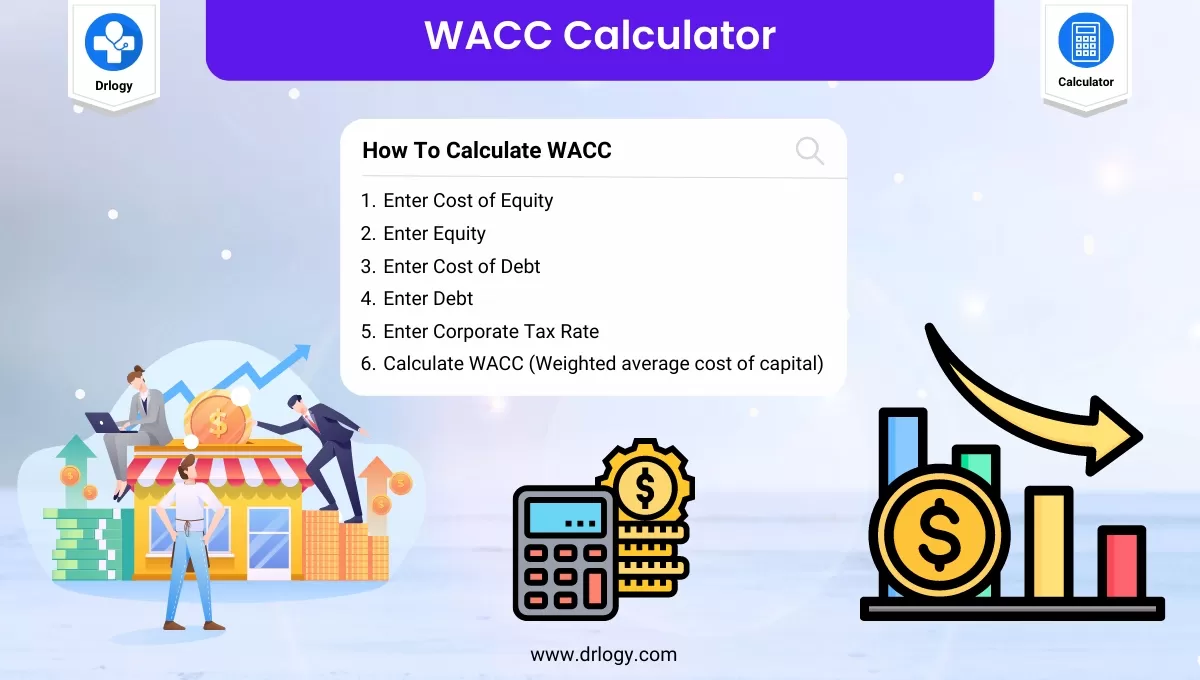
To calculate WACC (Weighted Average Cost of Capital) on a calculator, follow these steps: 1. Determine the cost of equity and cost of debt using appropriate financial models. 2. Determine the market value of equity and debt in the company's capital structure. 3. Determine the weights of equity and debt based on the market values. 4. Apply the WACC formula: WACC = (Weight of Equity * Cost of Equity) + (Weight of Debt * Cost of Debt) * (1 - Tax Rate). By inputting the values and using the appropriate mathematical functions on the calculator, you can compute the company's WACC.

How do you calculate the cost of capital in Excel?

To calculate the cost of capital in Excel, follow these steps: 1. Determine the cost of equity using the CAPM or another appropriate model. 2. Calculate the cost of debt based on the company's borrowing costs. 3. Determine the weights of equity and debt in the capital structure, based on market values. 4. Apply the cost of capital formula in Excel: Cost of Capital = (Weight of Equity * Cost of Equity) + (Weight of Debt * Cost of Debt) * (1 - Tax Rate). By utilizing Excel's mathematical functions, businesses can compute their cost of capital for financial analysis and decision-making.

Can the cost of equity be negative?

The cost of equity cannot be negative in practical terms. The concept of cost of equity represents the required rate of return that equity investors demand for holding a company's stock, compensating them for the risk they undertake. Negative cost of equity would imply that investors are willing to pay the company for holding its stock, which is not realistic. While the cost of equity can be low or close to zero in certain cases, it is always a positive value.

Why use CAPM for the cost of equity?

The Capital Asset Pricing Model (CAPM) is commonly used to calculate the cost of equity because it provides a systematic approach to estimate the expected return on equity. CAPM considers the risk-free rate, market risk premium, and the stock's beta, which measures its sensitivity to market movements. This model enables companies to quantify the risk associated with their stock and determine a reasonable rate of return that compensates investors for holding that risk. CAPM's simplicity and ability to account for market conditions make it a widely used and accepted method for calculating the cost of equity.

What is cost of equity in cost of capital?

The cost of equity is one of the components in the cost of capital, which represents the overall cost of financing a company's operations. Cost of equity specifically reflects the rate of return that equity investors expect to receive for bearing the risk of investing in the company's stock. It is used in the Weighted Average Cost of Capital (WACC) formula, along with the cost of debt, to determine the weighted average cost of financing.

Why do we calculate the cost of equity?

Calculating the cost of equity is essential to determine the rate of return required by equity investors for holding a company's stock. It helps businesses assess the cost of financing through equity issuance and aids in investment analysis, capital budgeting, and valuation. The cost of equity is a critical component in the Weighted Average Cost of Capital (WACC) formula, which represents the average cost of financing a company's operations. By calculating the cost of equity, companies can make informed financial decisions, evaluate investment opportunities, and attract equity investors with reasonable expected returns.

What is the formula for the cost of debt?

The formula for the cost of debt is the interest rate or yield on a company's debt. It represents the cost incurred by the company for borrowing funds from creditors or issuing debt securities. The formula for calculating the cost of debt is: Cost of Debt = Annual Interest Expense / Total Debt. The result is usually expressed as a percentage, representing the cost of servicing the company's debt obligations. It is a crucial component in the Weighted Average Cost of Capital (WACC) formula, which considers both the cost of debt and the cost of equity in determining the average cost of financing a company's operations.

What is the formula for debt and equity?

The formula for debt is the total amount of outstanding debt, which can be found in the company's financial statements. It can include various forms of debt, such as bank loans, bonds, and other borrowings. The formula for equity is the total value of the company's ownership interest. It is calculated as the difference between the total assets and total liabilities of the company. In simple terms, Equity = Total Assets - Total Liabilities. These formulas represent the components used to calculate the Weighted Average Cost of Capital (WACC) and assess the company's financing structure.

What is the weighted cost of equity?

The weighted cost of equity refers to the cost of equity financing, weighted by its proportion in the company's capital structure. It is one of the components in the Weighted Average Cost of Capital (WACC) formula. The cost of equity is multiplied by the weight of equity, and the cost of debt is multiplied by the weight of debt. The weighted costs of equity and debt are then combined to calculate the WACC, which represents the average cost of financing a company's operations.

Is the cost of equity lower than WACC?

In general, the cost of equity is lower than the Weighted Average Cost of Capital (WACC) because WACC considers both the cost of equity and the cost of debt, and debt is typically cheaper than equity financing. Equity investors demand a higher rate of return to compensate for the risk they undertake, while debt financing benefits from the tax-deductibility of interest payments, reducing its overall cost. As a result, the cost of equity is higher than the cost of debt, and WACC is lower than the cost of equity due to the weightage of cheaper debt in the capital structure.

How do you calculate the marginal cost of equity?

The marginal cost of equity refers to the change in the cost of equity resulting from a change in the company's capital structure, specifically the proportion of equity financing. It is calculated as the difference in the cost of equity for two different capital structures, divided by the change in the percentage of equity financing. The formula for the marginal cost of equity is: Marginal Cost of Equity = (Cost of Equity with New Capital Structure - Cost of Equity with Current Capital Structure) / Change in Equity Financing Percentage.

How do you calculate the cost of equity for WACC in Excel?

To calculate the cost of equity for WACC in Excel, use the Capital Asset Pricing Model (CAPM) formula: Re = Rf + β * (Rm - Rf). Here, Re is the cost of equity, Rf is the risk-free rate, β is the stock's beta, Rm is the expected return of the market, and (Rm - Rf) is the market risk premium. You can input the values for risk-free rate, beta, and market risk premium, and Excel's mathematical functions will compute the cost of equity for use in the WACC formula.

Does WACC use the book value of equity?

No, WACC (Weighted Average Cost of Capital) uses the market value of equity, not the book value of equity. Market value reflects the current price of the company's outstanding shares and is based on the prevailing market conditions and investors' perception of the company's worth. In contrast, book value represents the historical cost of the company's equity as recorded in the financial statements and may not accurately reflect the current market sentiment or the company's true value.

What happens to WACC when the cost of equity increases?

When the cost of equity increases, the Weighted Average Cost of Capital (WACC) also increases. WACC considers both the cost of equity and the cost of debt in a company's capital structure. As the cost of equity rises, the overall cost of financing the company's operations becomes higher. WACC is a weighted average of the cost of equity and the cost of debt, and any increase in either component will lead to a higher WACC. This, in turn, makes it more challenging for the company to undertake new investment projects that can meet the higher required rate of return to create value for shareholders.

Is the cost of equity the same as the expected return?

The cost of equity and the expected return are closely related but not the same. The cost of equity represents the rate of return that equity investors demand for holding the company's stock, and it is used as the discount rate in financial analyses like DCF. On the other hand, the expected return refers to the anticipated rate of return on an investment, which could include various types of securities or assets. While the cost of equity is specific to equity investments in a particular company, the expected return can refer to the anticipated returns on a broader range of investments.

What is the cost of equity in DCF?

In Discounted Cash Flow (DCF) analysis, the cost of equity represents the rate of return that equity investors demand for holding the company's stock. It is a crucial component in determining the discount rate used to calculate the present value of future cash flows in the DCF model. The cost of equity reflects the perceived risk associated with the stock and plays a significant role in valuing a company's equity. As part of DCF, the cost of equity is combined with the cost of debt, both weighted by their respective proportions in the capital structure, to calculate the Weighted Average Cost of Capital (WACC).

How is WACC used in equity valuation?

WACC (Weighted Average Cost of Capital) is used in equity valuation, particularly in Discounted Cash Flow (DCF) analysis. DCF analysis involves projecting future cash flows of a company and discounting them back to their present value using the WACC as the discount rate. The present value of these cash flows represents the intrinsic value of the company's equity. If the DCF value is higher than the current market price of the equity, the stock may be undervalued and vice versa. WACC plays a vital role in determining the appropriate discount rate, which affects the overall valuation result.

Is the cost of equity a CAPM?

Yes, the cost of equity is a component calculated using the Capital Asset Pricing Model (CAPM). CAPM is a financial model that estimates the required rate of return that equity investors demand for holding the company's stock, considering the risk of the stock relative to the market. The cost of equity obtained from the CAPM formula reflects the compensation investors expect for bearing the risk associated with the stock.

What are two ways you can calculate the cost of equity?

Two ways to calculate the cost of equity are: 1. Using the Capital Asset Pricing Model (CAPM), where Cost of Equity (Re) = Risk-Free Rate + Beta * Market Risk Premium. 2. Using the Dividend Discount Model (DDM), where Cost of Equity (Re) = Dividends per Share / Current Stock Price + Growth Rate of Dividends. Both methods estimate the rate of return that equity investors demand for holding the company's stock, taking into account market risk and expected dividends or growth.

Is the cost of equity equal to WACC?

No, the cost of equity is not equal to WACC (Weighted Average Cost of Capital). The cost of equity represents the required rate of return that equity investors demand for holding the company's stock. It is one of the components in the WACC formula. WACC, on the other hand, represents the average cost of financing a company's operations, considering both equity and debt financing. WACC includes the cost of equity and the cost of debt, weighted by their respective proportions in the capital structure.

What is alpha in WACC calculation?

Alpha is not directly involved in the WACC (Weighted Average Cost of Capital) calculation. Alpha is a measure used in the context of investment performance evaluation, particularly in the Capital Asset Pricing Model (CAPM). It represents the difference between the actual return of an investment and the return predicted by the CAPM based on the stock's beta and the market return. Alpha is used to assess the stock's performance relative to its risk exposure.

What is the beta formula in CAPM?

The beta formula in CAPM (Capital Asset Pricing Model) is used to calculate the beta of a stock, which measures the stock's sensitivity to market movements. The formula is: Beta (β) = Covariance (Stock Returns, Market Returns) / Variance (Market Returns). Beta measures the systematic risk of a stock, and a beta of 1 indicates that the stock moves in line with the market. A beta greater than 1 indicates higher volatility than the market, while a beta less than 1 indicates lower volatility.

What is the full form of the WACC formula?

The full form of the WACC formula is the Weighted Average Cost of Capital. It represents the average cost of financing a company's operations, taking into account both equity and debt financing. The formula is: WACC = (E/V * Re) + (D/V * Rd * (1 - T)). E is the market value of equity, V is the total market value of the firm (E + D), Re is the cost of equity, D is the market value of debt, Rd is the cost of debt, and T is the corporate tax rate. By calculating WACC, companies can determine the minimum rate of return required to compensate both equity shareholders and debt holders for their investments.
  • Home / 
  • Calculator  / 
  • FAQ  / 
  • How do you calculate the cost of debt and the cost of equity?

DOCTOR'S MOST TRUSTED HEALTHCARE PLATFORM

10M+

Patients

30000+

Doctors

25000+

Hospitals/Labs

Day

Calculator

Test

Health

Plus