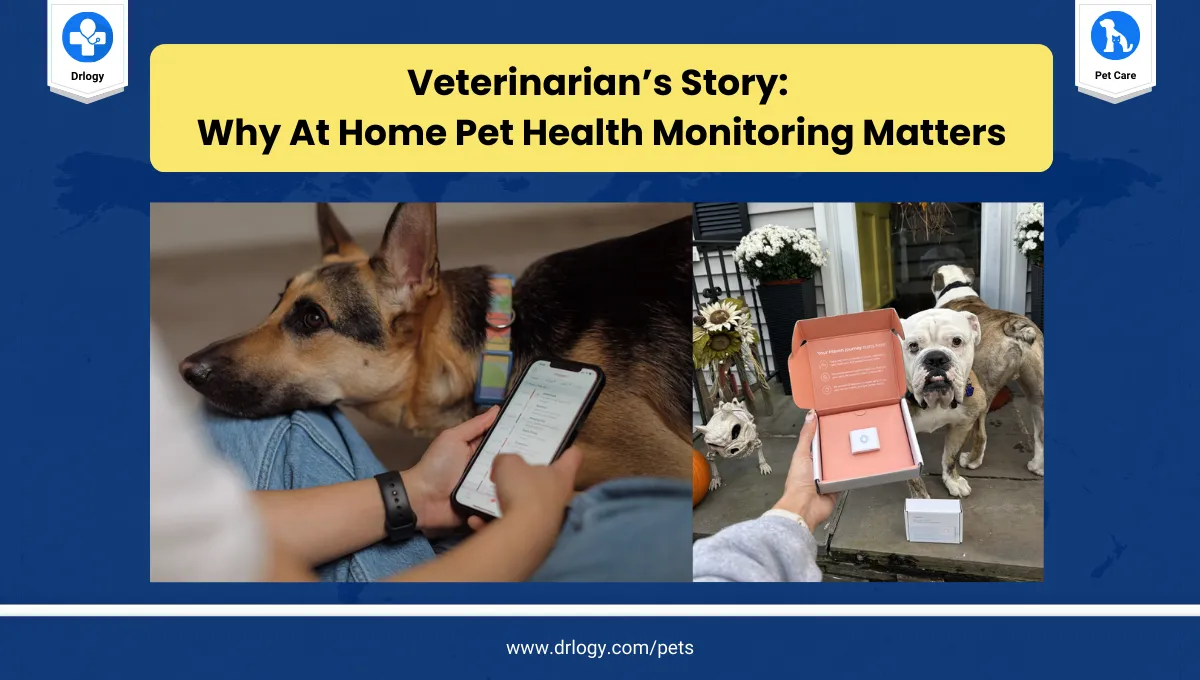
Veterinarian’s Story: Why At-Home Pet Health Monitoring Matters
Being a veterinarian doesn’t protect you from heartbreak.
If anything, it can make it heavier.
Over the past few months, I’ve been reminded of this in deeply personal ways. My own dog, Vivian, was recently diagnosed with inflammatory bowel disease (IBD). Not long after, my fiancé and I lost his beloved dog, Biscuit, to an acute and completely unexpected episode of congestive heart failure.
Both experiences have reshaped how I think about at-home monitoring, peace of mind, and the tools we have, or wish we had, when we love animals as fiercely as we do.
When There Are No Warning Signs
Biscuit was a Cavalier King Charles Spaniel, a breed we know is at increased risk for mitral valve disease. And yet, he had never been diagnosed with a heart murmur. There were no warning signs that stood out to us. Nothing told us we were on borrowed time.
We were away for a weekend, and Biscuit stayed with a trusted friend. When we came home, he just seemed “off.” Overnight, his breathing rate and effort worsened rapidly. In hindsight, changes in resting respiratory rate are often one of the earliest measurable signs in dogs with developing heart disease, but they’re easy to miss without continuous monitoring at home. He was rushed to the emergency hospital, where, despite oxygen therapy and diuretics, he did not respond. We made the heartbreaking decision to say goodbye.
As an ER and ICU veterinarian, I am no stranger to cases like this. But when it’s your own dog, the questions come flooding in.
Should we have caught something sooner?
Would earlier changes in his breathing have been noticeable at home?
Did we miss an opportunity to intervene?
That guilt is something many pet owners feel. Veterinarians are no exception.
A Tool That Reframed How I Think About Monitoring
Shortly after Biscuit’s death, I learned about Maven, a wearable health monitor designed to track trends in pets at home. I’ll be honest. I initially wished I had known about it sooner. Not because it guarantees a different outcome, but because it offers awareness, data, and peace of mind in situations where subtle changes matter.
Maven Pet is a clinically-validated pet health monitoring system, often referred to as a dog health tracker, designed for continuous at-home monitoring of trends like breathing, heart rate, activity, sleep, and hydration.
I decided to start using Maven with Vivian, especially given her recent IBD diagnosis.
What At-Home Monitoring Looks Like in Real Life
One of the things I appreciate most about Maven is how easy it is to use. The monitor fits comfortably on Vivian’s collar, it’s quick to charge and set up, and the app is intuitive.
Maven tracks several parameters that are incredibly relevant for dogs with chronic illness, including:
- Heart rate
- Resting respiratory rate
- Activity level
- Drinking behavior
- Sleep patterns
- Even head shaking, which can be helpful for dogs with itchiness or ear issues
For Vivian, this has been particularly reassuring. When her IBD flares, she becomes more lethargic and develops increased drinking. Being able to track trends in her activity, water intake, and resting respiratory rate gives me objective information rather than relying on memory, or gut feeling alone or manual checks.
As someone who has spent years telling clients to “monitor at home,” I can say firsthand how comforting it is to actually see the data.
More Than a Pet Health Tracker
Beyond health metrics, the app allows you to:
- Set medication reminders
- Store medical reports in one place
- Review your pet’s daily activity feed to see what they were up to while you were at work or busy
These features might sound small, but when life is full and your pet has ongoing medical needs, they add up to a sense of control and connection.
A Tool for Peace of Mind
As an emergency and critical care specialist, I often see pets when things have already escalated. Many conditions, especially heart disease, respiratory issues, and metabolic disorders like diabetes, can change subtly before they become emergencies.
Maven doesn’t replace veterinary care. It doesn’t diagnose disease. But it does help pet owners notice changes sooner and have more informed conversations with their veterinary team.
As a veterinarian, this kind of trend-based, at-home monitoring mirrors how we think about early warning signs in clinical practice
After losing Biscuit, I’m deeply aware that not every outcome can be changed. But I also know how powerful it is to feel informed rather than blindsided.
Holding Uncertainty With Care
If there’s one thing these experiences have reinforced, it’s this: loving animals means accepting uncertainty. Tools like Maven don’t remove that uncertainty, but they can soften it. They can help us feel a little less helpless, a little more connected, and a little more prepared.
For pet parents looking for a veterinarian-aligned way to monitor health at home, Maven provides continuous insight into the trends that often change before emergencies happen.
And sometimes, that makes all the difference.
About the writer:
Dr. Marie Holowaychuk DVM, DACVECC, CYT
Dr. Marie Holowaychuk is a board-certified emergency and critical care veterinarian, speaker, and wellbeing advocate. She is the author of A Compassionate Calling: What It Really Means to Be a Veterinarian and the founder of Reviving Veterinary Medicine, where she supports veterinary professionals in building sustainable, fulfilling careers.


