
Immunoglobulin E (IgE Test) For Allergic Reactions
The Immunoglobulin E (IgE) test is a blood test that measures the level of IgE antibodies in your body, which are primarily associated with allergic reactions and hypersensitivity responses. It helpsentify allergies and assess the immune system's response to allergens.
IgE Test
Here are the basic details for the IgG Test.
| Also Known As | Immunoglobulin E Test |
|---|---|
| Type | Blood Test |
| Purpose | Measure IgE Antibody Levels |
| Sample Type | Serum |
| Preparation | No |
| Fasting | No |
| Gender | Unisex |
| Age Group | Any |
| Normal Value | <64 mg/dL |
| Reporting Time | Usually within 1-2 days |
| Cost | 500-1000 INR* |
*Price range may vary as per location, lab type, and procedure of lab test.
IgE Test Means
IgE test measures the levels of Immunoglobulin E in the blood.
- IgE is an antibody associated with allergic reactions.
- Elevated IgE levels can suggest allergies or parasitic infections.
- This test aids in diagnosing allergies and monitoring allergy treatments.
- It helpsentify specific allergens triggering allergic responses.
IgE Test Purpose
Here is the basic purpose of the IgE Test.
- Diagnose allergies, asthma, and atopic conditions.
- Identify triggers for allergic reactions.
- Monitor treatment effectiveness for allergies and asthma.
- Assess potential risks during allergen-specific immunotherapy.
- Aid in understanding and managing allergic disorders.

IgE Test Preparation
Here is the basic preparation for the IgE Test.
Before Test
- No fasting or specific preparation is needed.
- Inform your doctor about any medications or allergies.
During Test
- A blood sample is collected from a vein in your arm.
After Test
- Resume regular activities immediately.
- No special post-test instructions are typically required.
IgE Test Procedure
During an IgE Test Procedure, a healthcare provider will:
- Collect a blood sample from a vein in your arm.
- Send the blood sample to a laboratory for analysis.
- Measure IgE antibody levels in the blood to assess allergic reactions.
- Interpret the results to aid in diagnosing allergies or immune disorders.
IgE Test Result
Here are the Interpreting IgE Test Results.
- Low Levels: Low IgE levels are typically considered normal and may indicate a lower risk of allergies and immune system sensitivities.
- Normal Range: Falling within the normal range suggests a balanced immune system, but it doesn't necessarily rule out allergies or sensitivities.
- High Levels: Elevated IgE levels can be a sign of allergies or immune responses to allergens or parasites. Consult a healthcare professional for further evaluation if your levels are high and you're experiencing allergy symptoms.
IgE Test Report
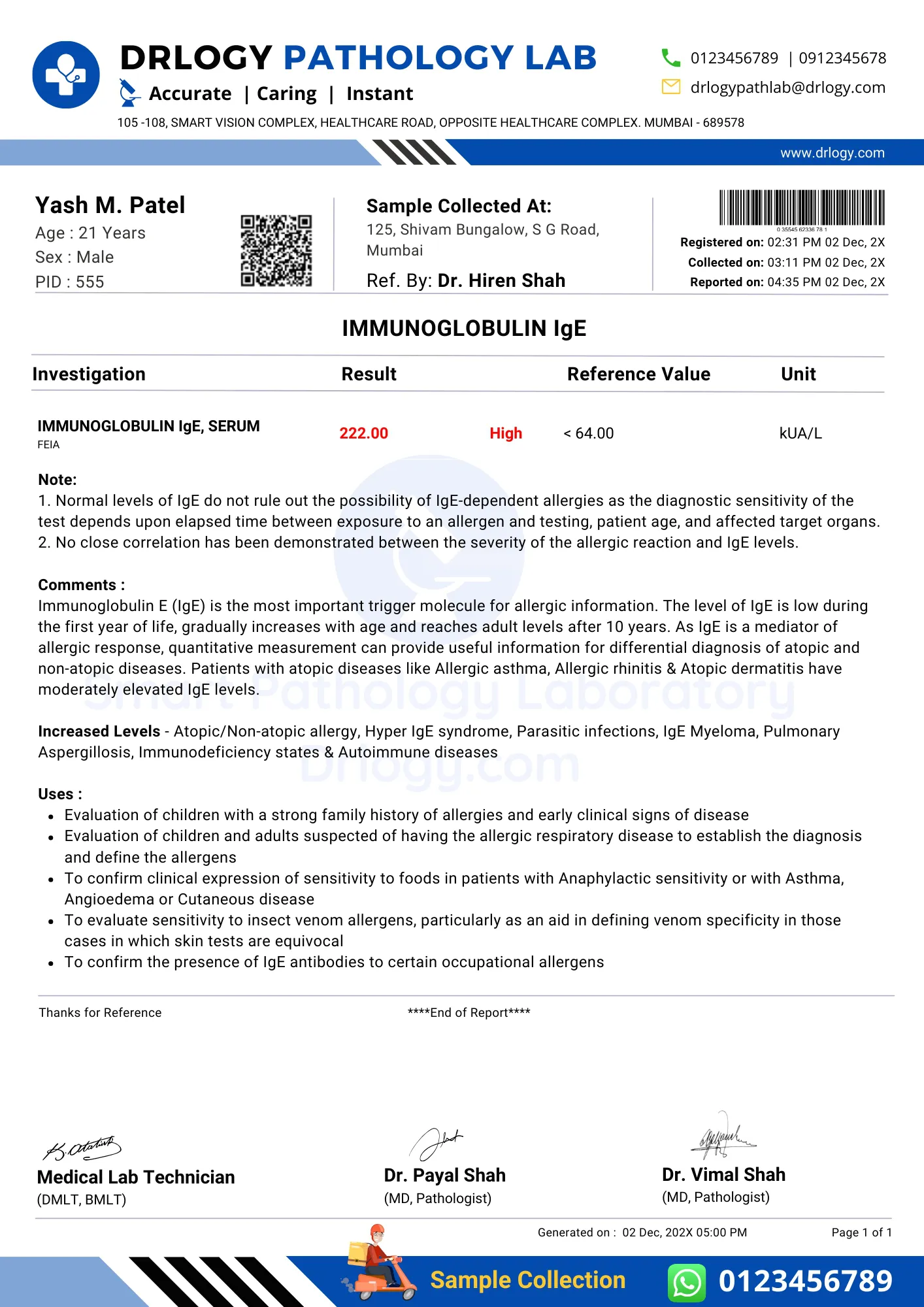
IgE Test

IgE Normal Test Report PDF Format
IgE Test

IgE Abnormal Test Report PDF Format
IgE Test Normal Range
The normal reference range for IgE levels in adults can vary slightly depending on the laboratory and measurement units used.
| IgE Level | Normal Range |
|---|---|
| Adult | <64 mg/dL |
IgE Test Interpretation
Here is basic Interpretation value of IgE Test.
| IgE Level (mg/dL) | Interpretation | Risk |
|---|---|---|
| Below 64 | Normal IgE levels | Typically low risk |
| 64 or higher | Elevated IgE levels | Potential allergic condition |
IgE Test High Levels
Here are the causes of high IgE levels:
| Causes | Description |
|---|---|
| Allergies | IgE levels elevate in response to allergens. |
| Allergic Disorders | Conditions like asthma, eczema, and hay fever. |
| Parasitic Infections | Worm or parasite infections can trigger IgE. |
| Autoimmune Diseases | Some autoimmune conditions may raise IgE levels. |
| Atopic Dermatitis | A type of skin inflammation associated with IgE. |
IgE Test Low Levels
Here are the causes of low IgE levels:
| Causes | Description |
|---|---|
| Immune Deficiency Disorders | Some immune deficiencies can lead to low IgE. |
| Medications | Certain medications can suppress IgE levels. |
| Malnutrition | Poor nutrition can result in decreased IgE. |
| Severe Infections | Chronic or severe infections may lower IgE. |
| Underlying Health Conditions | Conditions like cancer can reduce IgE levels. |
Specimen Requirements For IgE Test
Here are the specimen requirements for the IgE Test.
| Specimen | Serum | |
| Volume | 1 ml | |
| Container | Red-top tube or gel-barrier tube | |
| Collection | Samples suspected of having macroglobulins or cryoglobulins should be drawn and held at 37°C. | |
| Storage | Refrigerate or freeze. | |
Sample Stability | Temperature | Period |
|---|---|---|
Room temperature | 14 day | |
Refrigerated | 14 days | |
Frozen | 14 days | |
Freeze/thaw cycles | Stable x3 | |
Causes for Rejection | Grossly hemolyzed; bacterial contamination; lipemic specimen; icteric specimen; non-serum specimen types | |
IgE Test is Safe?
IgE Test is generally safe when performed by a healthcare professional.
- Minimal risk of infection or complications.
- Follow proper hygiene practices during blood collection.
When Do You Get IgE Test Results?
- IgE test results are available usually within 1-2 days to a week after the blood sample is taken.
- The exact reporting time may depend on the laboratory and healthcare provider.
IgE Test Limitation
- May not pinpoint specific allergens accurately.
- Normal levels don't rule out allergies.
- False positives and negatives possible.
IgE Test Risk Factors
- Low risk, standard blood test procedure.
- Minimal risk of infection or bleeding.
Doctor Recommendations After IgE Test Result
Here are the Doctor's recommendations or consult a specialist after the IgE test.
| IgE Test Result | Doctor to Visit | Reason |
|---|---|---|
| High | Allergist | Allergic conditions, asthma, or infections |
| Normal | No specific doctor | Routine assessment or no concerns |
| Low | Immunologist | Possible immunodeficiency or health issue |
IgE Test Price
Here are the estimated IgE Test Prices in India with different top cities:
| City | Price Range |
|---|---|
| Mumbai | 500-1000 |
| New Delhi | 600-1000 |
| Bangalore | 500-1000 |
| Hyderabad | 600-1000 |
| Kolkata | 500-1000 |
| Pune | 600-1000 |
| Lucknow | 500-1000 |
| Noida | 600-1000 |
| Surat | 500-1000 |
| Gurugram | 600-1000 |
| Patna | 500-1000 |
| Chennai | 600-1000 |
| Jaipur | 600-1000 |
| Ahmedabad | 600-1000 |
*Prices are approximate and vary depending on a specific laboratory or healthcare facility.
Summary
Overall, IgE Test is essential for diagnosing allergies, asthma, and certain infections, helping patients and healthcare providersentify triggers and manage related conditions effectively. Also check Drlogy Test for detailed information about all medical tests for patients, doctors, scholers and medical students.
Reference


