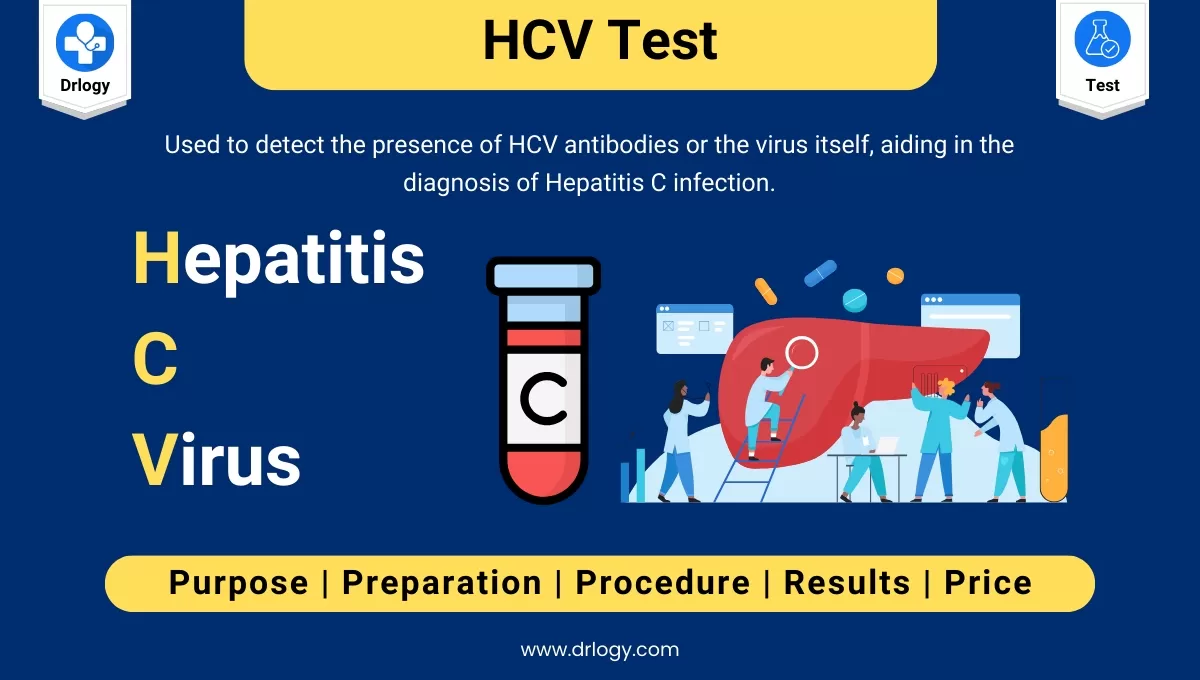
Hepatitis C Virus (HCV) Test For Detection of Virus Infection
The Hepatitis C Virus (HCV) Test is a blood test thatentifies the presence of the Hepatitis C virus in the bloodstream. It helps diagnose Hepatitis C infection and guides treatment decisions for the disease.
Hepatitis C Virus Test
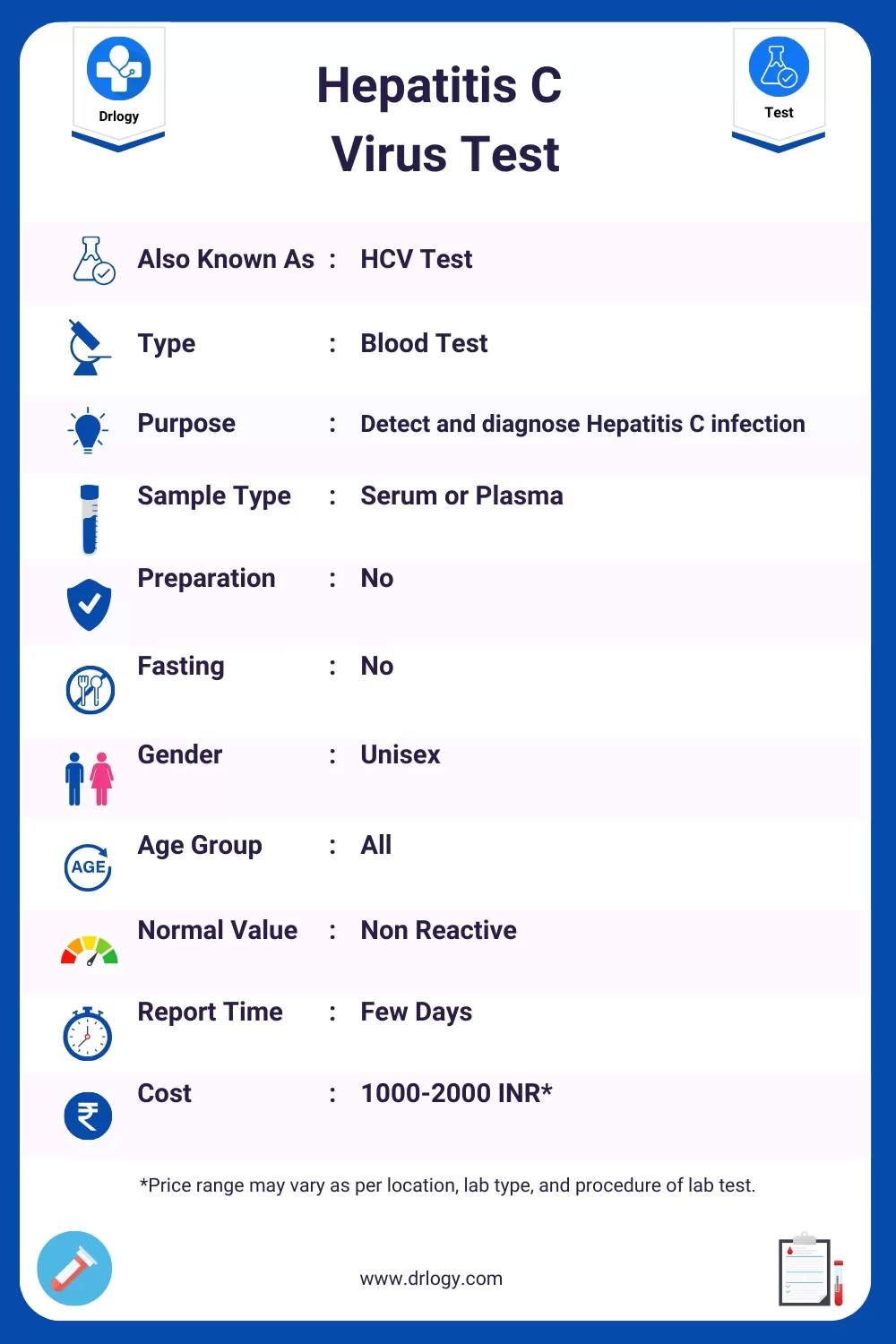
Here are the basic details of the Hepatitis C Virus Test.
| Also Known As | HCV Test |
| Type | Blood Test |
| Purpose | To detect and diagnose Hepatitis C infection |
| Sample Type | Serum or Plasma |
| Preparation | No |
| Fasting | No |
| Gender | Unisex |
| Age Group | All |
| Normal Value | Non Reactive |
| Reporting Time | Few Days |
| Cost | 1000-2000 INR* |
*Price range may vary as per location, lab type, and procedure of lab test.
Hepatitis C Virus Test Means
The Hepatitis C Virus (HCV) Test is a blood test used to detect the presence of the hepatitis C virus in the bloodstream.
- It is essential for diagnosing hepatitis C infections, which can lead to chronic liver disease if left untreated.
- This test helps determine the extent and severity of the infection, guiding treatment decisions.
- Early detection through the HCV test is critical for initiating antiviral therapy, preventing complications, and reducing the risk of transmission to others.
- Regular testing is vital for individuals at risk of hepatitis C, such as those with a history of injection drug use or blood transfusions, as it ensures timely medical intervention and care.
Hepatitis C Virus Test Purpose
The purpose of the Hepatitis C Virus Test is to:
- Detect Hepatitis C infection.
- Assess liver damage.
- Monitor treatment response.
- Determine transmission risk.
- Confirm resolution after treatment.
Hepatitis C Virus Test Preparation
Here is the basic preparation for the Hepatitis C Virus Test.
Before Test
- No fasting or special preparation.
- Inform your healthcare provider of any medications.
During Test
- Blood sample collection.
- Stay calm during the procedure.
After Test
- No specific post-test instructions.
- Resume normal activities.
Hepatitis C Virus Test Procedure
Here is the basic Hepatitis C Virus Test Procedure.
- Blood sample collection.
- Sample sent to the lab.
- Lab tests for HCV presence.
- Results reported to healthcare provider.
- Provider discusses results with you.
Hepatitis C Virus Test Result
- Reactive: A reactive result in the Hepatitis C Virus (HCV) Test indicates the presence of the Hepatitis C virus in the blood, suggesting an active HCV infection.
- Non-Reactive: A non-reactive result means that HCV is not detected in the blood, which typically indicates the absence of an active HCV infection.
Hepatitis C Virus Test Report

Hepatitis C Virus Test Positive Report
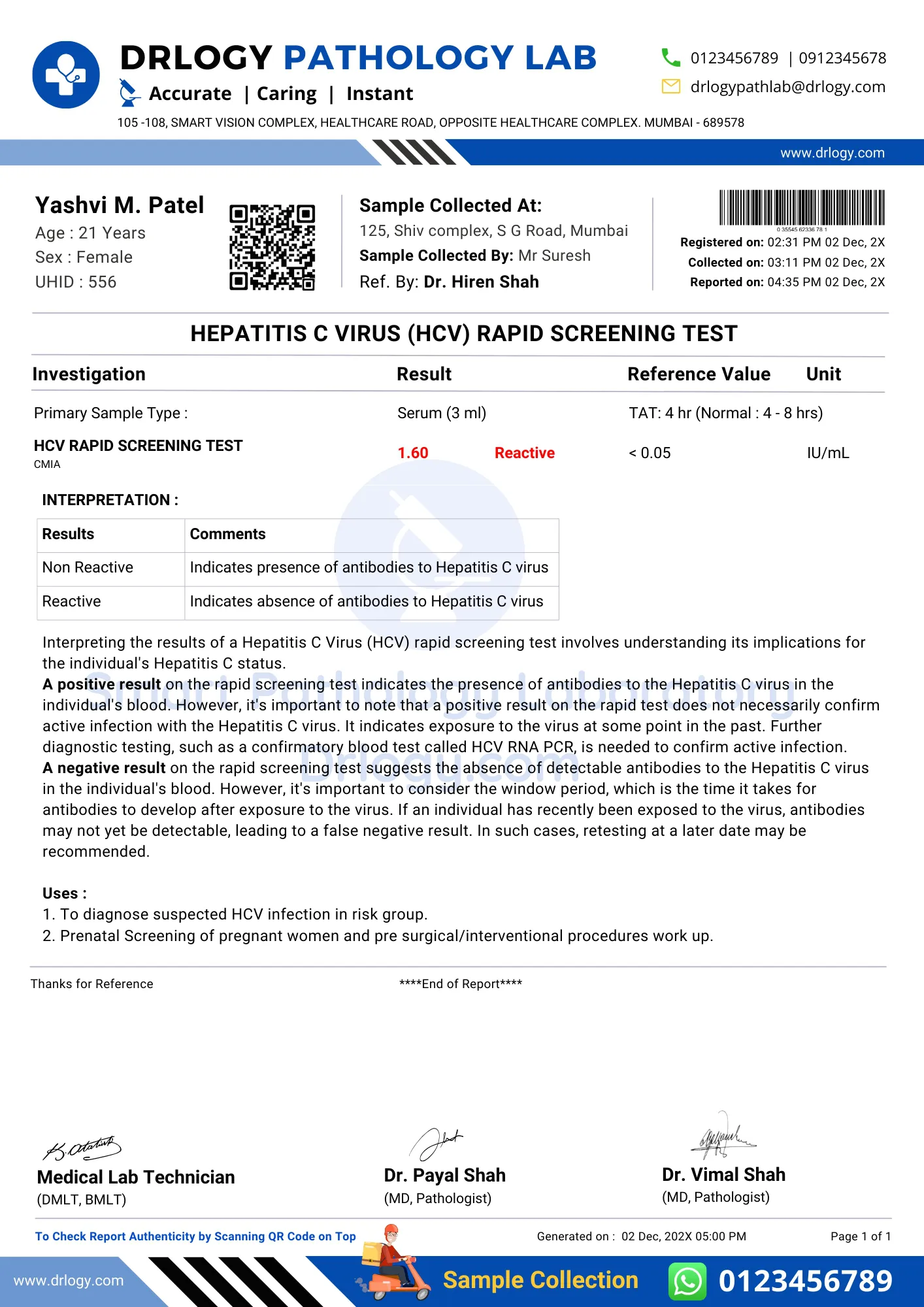
Hepatitis C Virus Positive Test Report PDF Format
Hepatitis C Virus Test Negative Report
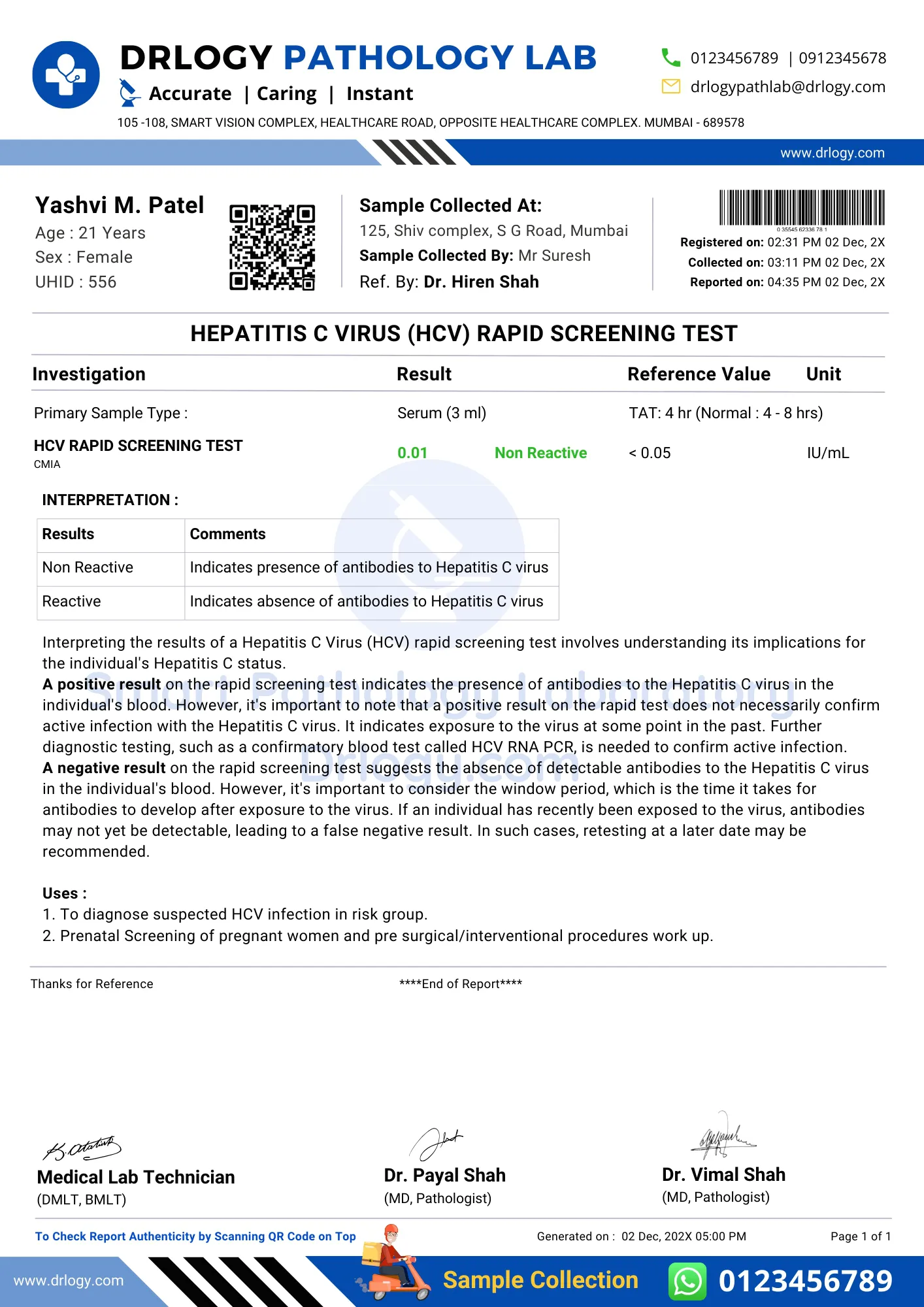
Hepatitis C Virus Negative Test Report PDF Format
Hepatitis C Virus Test Normal Range
Here is the normal range of the Hepatitis C Virus Test.
| HCV Results | Normal Range |
|---|---|
| Adult | Non Reactive |
Hepatitis C Virus Test Interpretation
Here is the Interpretation of the Hepatitis C Virus Test.
| Results | Remarks |
| Reactive | Indicates presence of antibodies to Hepatitis C virus |
| Non-Reactive | Indicates absence of antibodies to Hepatitis C virus |
Hepatitis C Virus Test Reactive Results
Here are potential causes of a reactive Hepatitis C Virus (HCV) Test result.
| Potential Causes | Description |
|---|---|
| Active Hepatitis C Infection | A reactive result typically indicates an active Hepatitis C virus infection. |
| Chronic Hepatitis C | Persistent presence of HCV suggests a chronic Hepatitis C infection. |
| Recent Exposure | A recent exposure to the Hepatitis C virus can lead to a reactive result, even before symptoms appear. |
| Prior Infection or Clearance | Individuals who have had a past HCV infection and cleared the virus may still show reactive antibodies. |
Hepatitis C Virus Test Non Reactive Results
Here are potential causes of a non-reactive Hepatitis C Virus (HCV) Test result.
| Potential Causes | Description |
|---|---|
| No Hepatitis C Infection | A non-reactive result indicates the absence of an active Hepatitis C virus infection. |
| Resolved or Cleared Infection | Some individuals may have cleared the virus after a past infection, leading to non-reactive results. |
| Immune Response Delay | In some cases, antibodies may not yet be detectable during the early stages of infection. |
| False Negative Result | Rarely, a non-reactive result may occur, and further testing may be needed for confirmation. |
Specimen Requirements For Hepatitis C Virus Test
Here are the specimen requirements for the Hepatitis C Virus Test.
| Specimen | Serum or Plasma | |
| Volume | 2 ml | |
| Container | Red-top tube or gel-barrier tube | |
| Collection | Separate serum from cells within one hour of collection. Transfer to a plastic transport tube before shipping. | |
| Storage | Room temperature | |
| Sample Stability | Temperature | Period |
| Room temperature | 14 days | |
| Refrigerated | 14 days | |
| Frozen | 14 days | |
| Freeze/thaw cycles | Stable x3 | |
| Causes for Rejection | Grossly hemolyzed; bacterial contamination; lipemic specimen; icteric specimen; non-serum specimen types | |
Hepatitis C Virus Test is Safe?
The Hepatitis C Virus Test is safe.
- Utilizes a standard blood sample collection.
- Conducted in a clinical setting by trained professionals.
When Do You Get Hepatitis C Virus Test Results?
- Hepatitis C Virus Test results are usually available within a few days.
- Reporting times can vary depending on the laboratory and healthcare facility.
Hepatitis C Virus Test Limitation
Here is the basic limitation of Hepatitis C Virus Test.
- Test cannot distinguish between acute and chronic infection.
- May not detect very recent infections during the window period.
- False positives and negatives can occur.
- Additional tests may be needed to confirm diagnosis.
- Test results alone do not provide information on liver damage or disease progression.
Hepatitis C Virus Test Risk Factors
Here are some of the risk factors of the Hepatitis C Virus Test.
- Risk factors for Hepatitis C Virus Test:
- Injection drug use.
- Blood transfusions before 1992.
- Needlestick injuries in healthcare settings.
- Sharing needles or drug paraphernalia.
- High-risk sexual behaviors with an infected partner.
Doctor Recommendations After Hepatitis C Virus Test Result
Here are the Doctor's recommendations or consult a specialist after the Hepatitis C Virus Test.
| Test Result | Doctor to Consult | Reason |
|---|---|---|
| Non-Reactive | Primary Care Physician | No Hepatitis C infection detected |
| Reactive | Infectious Disease Specialist | Possible Hepatitis C infection |
Hepatitis C Virus Test Price
Here are the estimated Hepatitis C Virus Test Prices in India with different top cities:
| City | Price Range (INR)* |
| 1000-2000 | |
| 1200-2000 | |
| 1000-2000 | |
| 1200-2000 | |
| 1000-2000 | |
| 1200-2000 | |
| 1000-2000 | |
| 1200-2000 | |
| 1200-2000 | |
| 1000-2000 | |
| 1200-2000 | |
| 1000-2000 | |
| 1200-2000 | |
| 1000-2000 |
*Prices are approximate and vary depending on a specific laboratory or healthcare facility.
Summary
Overall, Hepatitis C Virus Test is essential for detecting Hepatitis C infections, enabling early diagnosis and appropriate treatment. Also check Drlogy Test for detailed information about all medical tests for patients, doctors, scholers and medical students.
Reference
FAQ
What happens if HCV is positive?
If HCV (Hepatitis C virus) is positive, it indicates infection. Most people with chronic HCV may not have symptoms initially, but over time it can lead to liver damage, cirrhosis, or liver cancer.
Is it safe to live with someone with Hep C?
Yes, it is generally safe to live with someone with Hep C. The virus is primarily transmitted through blood-to-blood contact. Precautions like avoiding sharing of personal items with blood and practicing safe hygiene can minimize risks.
How long does Hep C take to damage liver?
Hep C progression varies. Some may develop liver damage within a few years, while others may have a slow progression over decades. Regular medical monitoring and early treatment can help prevent or manage liver damage.
Is HCV a serious disease?
Yes, HCV is a serious disease. If left untreated, it can lead to severe liver complications. However, advancements in medical treatments have significantly improved outcomes, and many people can be cured with antiviral medications.


