Ganglioside GD1a Antibody IgM Test Evaluating Nerve-related Conditions
Ganglioside GD1a Antibody IgM Test assesses IgM antibodies linked to nerve and muscle functions. It aids in diagnosing neurological conditions affecting nerve signaling and muscle strength.
Ganglioside GD1a Antibody IgM Test
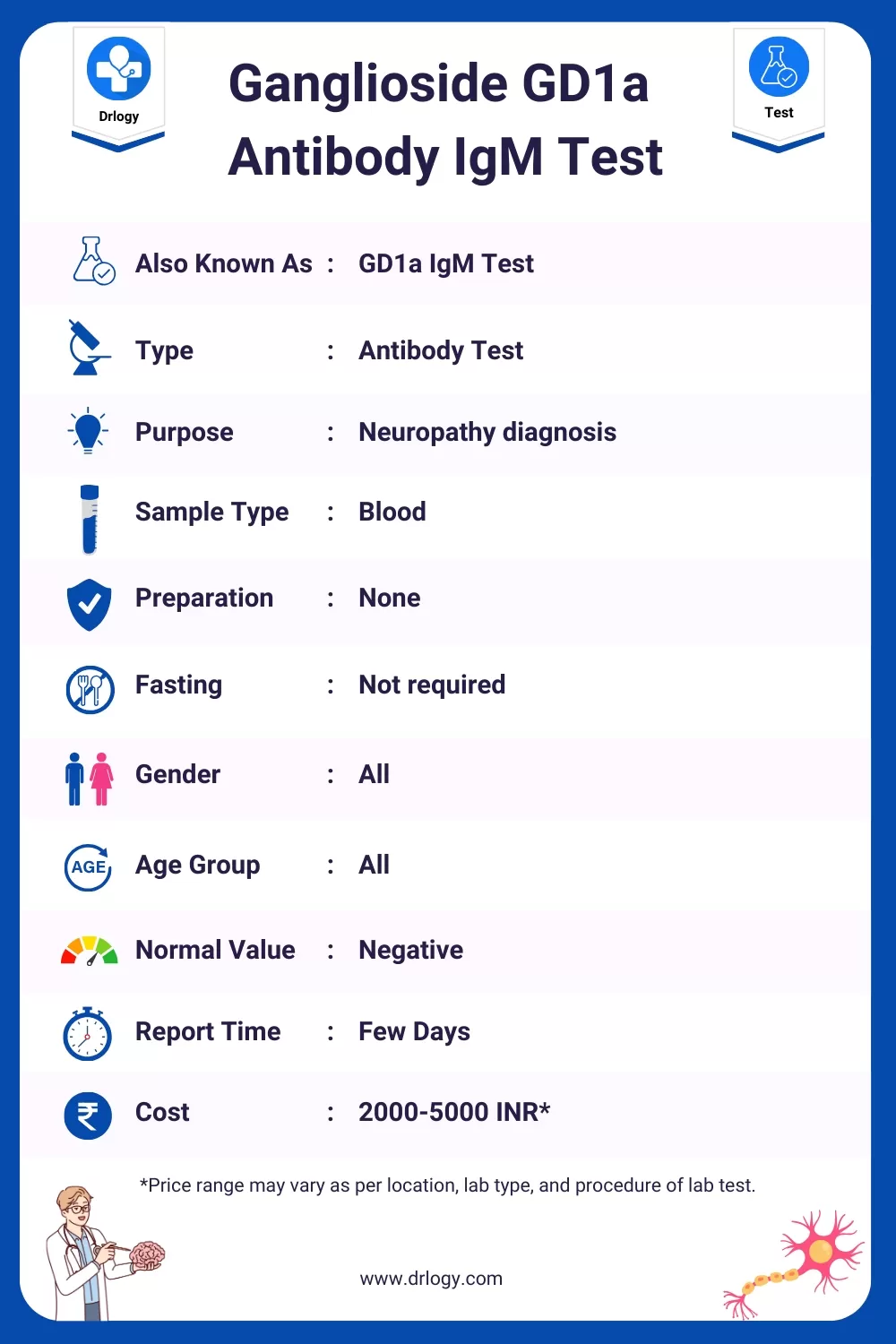
Here are the basic details of the Ganglioside GD1a Antibody IgM Test.
| Test Name | Ganglioside GD1a Antibody IgM Test |
|---|---|
| Also Known As | GD1a IgM Test |
| Type | Antibody Test |
| Purpose | Neuropathy diagnosis |
| Sample Type | Blood |
| Preparation | None |
| Fasting | Not required |
| Gender | All |
| Age Group | All |
| Normal Value | Negative |
| Reporting Time | Few Days |
| Cost | 2000-5000 INR* |
*Ganglioside GD1a Antibody IgM Test Price range may vary as per location, lab type, and lab test procedure.
Ganglioside GD1a Antibody IgM Test Means
Ganglioside GD1a Antibody IgM Test evaluates the presence of IgM antibodies against Ganglioside GD1a.
- Gangliosides are components of nerve cell membranes in the body.
- IgM antibodies can target and react against these gangliosides.
- Elevated IgM levels may indicate neurological or autoimmune disorders.
- This test can assist in diagnosing conditions related to nerve and autoimmune diseases.
- It aids healthcare professionals in assessing specific medical conditions.
Ganglioside GD1a Antibody IgM Test Purpose
The purpose of the Ganglioside GD1a Antibody IgM Test is to:
- Aid in diagnosing conditions related to nerve and autoimmune diseases.
- Assess autoimmune and neurological disorders.
- Detect IgM antibodies against Ganglioside GD1a.
- Contribute to the evaluation of nerve-related and autoimmune conditions.
- Provide insights into the origin of neurological symptoms.
- Guide healthcare decisions for patients with suspected autoimmune or nerve-related issues.
Ganglioside GD1a Antibody IgM Test Preparation
Here is the basic preparation for the Ganglioside GD1a Antibody IgM Test.
Before Test
- Adhere to any fasting or dietary instructions provided by your healthcare provider.
- Ensure you inform your healthcare provider of all medications and supplements you are currently taking.
- Be ready to discuss your medical history and any symptoms with your healthcare provider.
During Test
- Stay calm and cooperate with the healthcare professional performing the blood draw.
- Communicate any discomfort or unusual sensations during the procedure.
- Follow any additional instructions given by the healthcare provider.
After Test
- Avoid strenuous physical activities and heavy lifting immediately after the blood draw.
- Maintain the bandage on the puncture site for the recommended time.
- Await communication from your healthcare provider regarding the test results and any necessary follow-up.
Ganglioside GD1a Antibody IgM Test Procedure
Here is the basic Ganglioside GD1a Antibody IgM Test Procedure.
- Arrange the test with your healthcare provider.
- Adhere to any pre-test instructions asected.
- Provide a blood sample during your appointment.
- The blood sample is sent to a laboratory for analysis.
- Await test results from your healthcare provider.
- Discuss further actions and potential follow-up with your healthcare provider.
Ganglioside GD1a Antibody IgM Test Result
Here is the basic reading of the Ganglioside GD1a Antibody IgM Test results.
- Positive Result: The presence of IgG antibodies against Ganglioside GD1b in the blood, potentially linked to conditions like Guillain-Barré syndrome or other neurological disorders.
- Negative Result: Absence of IgG antibodies against Ganglioside GD1b, indicating no specific immune response to this ganglioside.
- Titer Level: The titer level quantifies the amount of IgG antibodies present, with a higher titer suggesting a stronger immune response.
- Consult Healthcare Provider: Seek guidance and interpretation from a healthcare provider who will consider your clinical history and symptoms alongside the test results.
Ganglioside GD1a Antibody IgM Test Positive Result Report

Ganglioside GD1a Antibody IgM Test Positive Report
Ganglioside GD1a Antibody IgM Test Positive Result Report PDF
Ganglioside GD1a Antibody IgM Test Negative Result Report

Ganglioside GD1a Antibody IgM Test Negative Report
Ganglioside GD1a Antibody IgM Test Negative Result Report PDF
Ganglioside GD1a Antibody IgM Test Normal Result
Here is the normal result of the Ganglioside GD1a Antibody IgM Test.
| Test Name | Normal Result | Meaning of Result |
|---|---|---|
| Ganglioside GD1a Antibody IgM Test | Negative | No significant IgM antibodies were found. |
Ganglioside GD1a Antibody IgM Test Interpretation
Here is the Interpretation of the Ganglioside GD1a Antibody IgM Test.
| Results | Interpretation |
|---|---|
| Positive | IgM antibodies detected (abnormal). |
| Negative | No IgM antibodies were detected (normal). |
Ganglioside GD1a Antibody IgM Test Positive Result
Here are the potential causes of the Positive Result of the Ganglioside GD1a Antibody IgM Test.
| Positive Results | Potential Causes |
|---|---|
| Sensory ataxic neuropathy | Autoimmune neuropathy |
| Miller Fisher Syndrome | Immune-related neurological disorders |
| Chronic Inflammatory Demyelinating Polyradiculoneuropathy (CIDP) | Neuropathic conditions |
| Bickerstaff Brainstem Encephalitis | Sensory motor neuropathies |
| Other autoimmune neuropathies | Neurological complications |
Ganglioside GD1a Antibody IgM Test Negative Result
Here are the potential causes of Negative Result of Ganglioside GD1a Antibody IgM Test levels:
| Negative Results | Potential Causes |
|---|---|
| Absence of neurological disorder | Different type of antibody present |
| Other immune-related disorders | Incomplete antibody panel tested |
| Normal immune response | Early stage of the neurological condition |
| Non-neurological conditions | Antibody levels below the detection limit |
| Insufficient antibodies present | Antibody test sensitivity issues |
Specimen Requirements For Ganglioside GD1a Antibody IgM Test
Here are the specimen requirements for the Ganglioside GD1a Antibody IgM Test.
| Specimen | Serum | |
| Volume | 1 mL | |
| Container | Red-top tube or gel-barrier tube | |
| Collection | If a red-top tube is used, transfer separated serum to a plastic transport tube. | |
| Storage | Room temperature | |
| Sample Stability | Temperature | Period |
| Room temperature | 14 days | |
| Refrigerated | 14 days | |
| Frozen | 14 days | |
| Freeze/thaw cycles | Stable x6 | |
| Causes for Rejection | Sample type other than serum received. | |
Ganglioside GD1a Antibody IgM Test is Safe?
The Ganglioside GD1a Antibody IgM Test is generally safe and well-tolerated by most individuals.
- Minor discomfort or bruising at the blood collection site may be possible side effects.
- Patients should discuss any allergies or concerns with their healthcare provider before the test.
When Do You Get Ganglioside GD1a Antibody IgM Test Results?
- You can typically expect to receive Ganglioside GD1a Antibody IgM test results within a few days to a week after the blood sample is collected.
- The actual turnaround time may depend on the laboratory's workload and the healthcare facility's protocols.
Ganglioside GD1a Antibody IgM Test Limitation
Here is the basic limitation of the Ganglioside GD1a Antibody IgM Test.
- False negatives are possible, especially in certain neurological disorders.
- Limited sensitivity for rare conditions.
- Cannot determine the root cause of symptoms.
- Results may not reflect disease severity or progression.
- Cross-reactivity with other antibodies can complicate interpretation.
- Clinical correlation and further diagnostic assessments may be needed.
Ganglioside GD1a Antibody IgM Test Risk Factors
Here are some of the risk factors of the Ganglioside GD1a Antibody IgM Test.
- The test generally carries low risk factors.
- Minor discomfort or bruising at the blood collection site may occur.
- Risks may be elevated in individuals with bleeding disorders.
- Allergic reactions to test materials are a potential concern.
- Following standard safety procedures is important to mitigate these risks.
Doctor Recommendations After Ganglioside GD1a Antibody IgM Test Result
Here are the Doctor's recommendations or consult a specialist after the Ganglioside GD1a Antibody IgM Test.
| Test Result | Doctor to Visit | Reason to Go |
|---|---|---|
| Positive | Neurologist | Assess neurological condition. |
| Negative | Consult as needed | Depending on symptoms or issues. |
Ganglioside GD1a Antibody IgM Test Price
Here are the estimated Ganglioside GD1a Antibody IgM Test Prices in India with different top cities:
| City | Price Range (INR)* |
| 2000-5000 | |
| 2500-5000 | |
| 2000-5000 | |
| 2500-5000 | |
| 2000-5000 | |
| 2500-5000 | |
| 2000-5000 | |
| 2500-5000 | |
| 2500-5000 | |
| 2000-5000 | |
| 2500-5000 | |
| 2000-5000 | |
| 2500-5000 | |
| 2000-5000 |
*Ganglioside GD1a Antibody IgM Test Price are approximate and vary depending on a specific laboratory or healthcare facility.
Summary
Overall, Ganglioside GD1a Antibody IgM Test plays a in evaluating nerve-related conditions. Also check Drlogy Test for detailed information about all medical tests for patients, doctors, scholers and medical students.
Reference
- Antiganglioside antibodies Anti GD1a - Wikipedia [1].
- Clinical and Diagnostic of Ganglioside Antibody Testing- NIH [2].


