
Factor II Mutation Test For Blood Clotting Disorders
The Factor II Mutation Test measures a clotting protein's activity. It's vital in diagnosing and managing blood clotting disorders.
Factor II Mutation Test
Here are the basic details of the Factor II Mutation Test.
| Test Name | Factor II Mutation Test |
|---|---|
| Also Known As | Prothrombin Activity Test |
| Type | Blood Coagulation Test |
| Purpose | Measure Prothrombin Activity |
| Sample Type | Blood |
| Preparation | None |
| Fasting | Not Required |
| Gender | All |
| Age Group | All |
| Normal Value | 70-120% |
| Reporting Time | Within Week |
| Cost | 4000-5000 INR* |
*Factor II Mutation Test Price range may vary as per location, lab type, and lab test procedure.
Factor II Mutation Test Means
Factor II, also known as prothrombin, is a blood clotting protein.
- The Factor II Mutation Test assesses the activity of Factor II in the blood.
- Abnormal Factor II activity can lead to bleeding or clotting disorders.
- This test is essential for diagnosing and monitoring conditions related to Factor II.
- It aids in determining the appropriate treatment and managing clotting disorders.
- Factor II testing is valuable in guiding therapy decisions, especially in anticoagulant management.
Factor II Mutation Test Purpose
The purpose of the Factor II Mutation Test is to:
- Measure Factor II (prothrombin) activity.
- Diagnose clotting and bleeding disorders.
- Determine treatment approaches.
- Manage anticoagulant therapy.
- Aid in clot-related condition care.

Factor II Mutation Test Preparation
Here is the basic preparation for the Factor II Mutation Test.
Before Test
- Inform your healthcare provider about any medications you are taking, especially anticoagulants or blood-thinning drugs, as they can affect test results.
- Typically, fasting is not required for this test, but follow any specific instructions provided by your healthcare provider.
- Share any personal or family history of blood clots or clotting disorders with your healthcare provider.
During Test
- A blood sample will be collected from a vein in your arm using a needle.
- You may experience a brief needle prick or mild discomfort during the blood draw.
- Cooperate with the healthcare professional performing the test and remain still during the procedure.
After Test
- Apply gentle pressure to the puncture site with a cotton ball or bandage to stop any bleeding.
- You can typically resume your regular activities right after the test.
- Wait for your healthcare provider to discuss the results and any recommendations for treatment or follow-up based on the Factor II functional activity levels.
Factor II Mutation Test Procedure
Here is the basic Factor II Mutation Test Procedure.
- Obtain a blood sample from a vein in the patient's arm.
- Assess the sample to measure Factor II functional activity.
- Results are typically available on the same day.
- Discuss the results with the healthcare provider.
- Adjust treatment or management as necessary based on Factor II function.
- Regular monitoring may be recommended for patients with Factor II-related conditions.
Factor II Mutation Test Result
Here is the basic reading of the Factor II Mutation Test results.
- Factor II Mutation: The result indicates whether a mutation in the Factor II (prothrombin) gene is present or not.
- Positive Result (Mutation Detected): Suggests an increased risk of abnormal blood clot formation, which can lead to thrombophilia.
- Negative Result (Mutation Not Detected): Indicates the absence of the Factor II mutation, reducing the risk of this specific clotting disorder.
- Clinical Evaluation Required: A healthcare provider should interpret the test result in the context of the patient's medical history and other risk factors to assess the overall risk of clotting disorders and determine appropriate management.
Factor II Mutation Test Normal Result Report
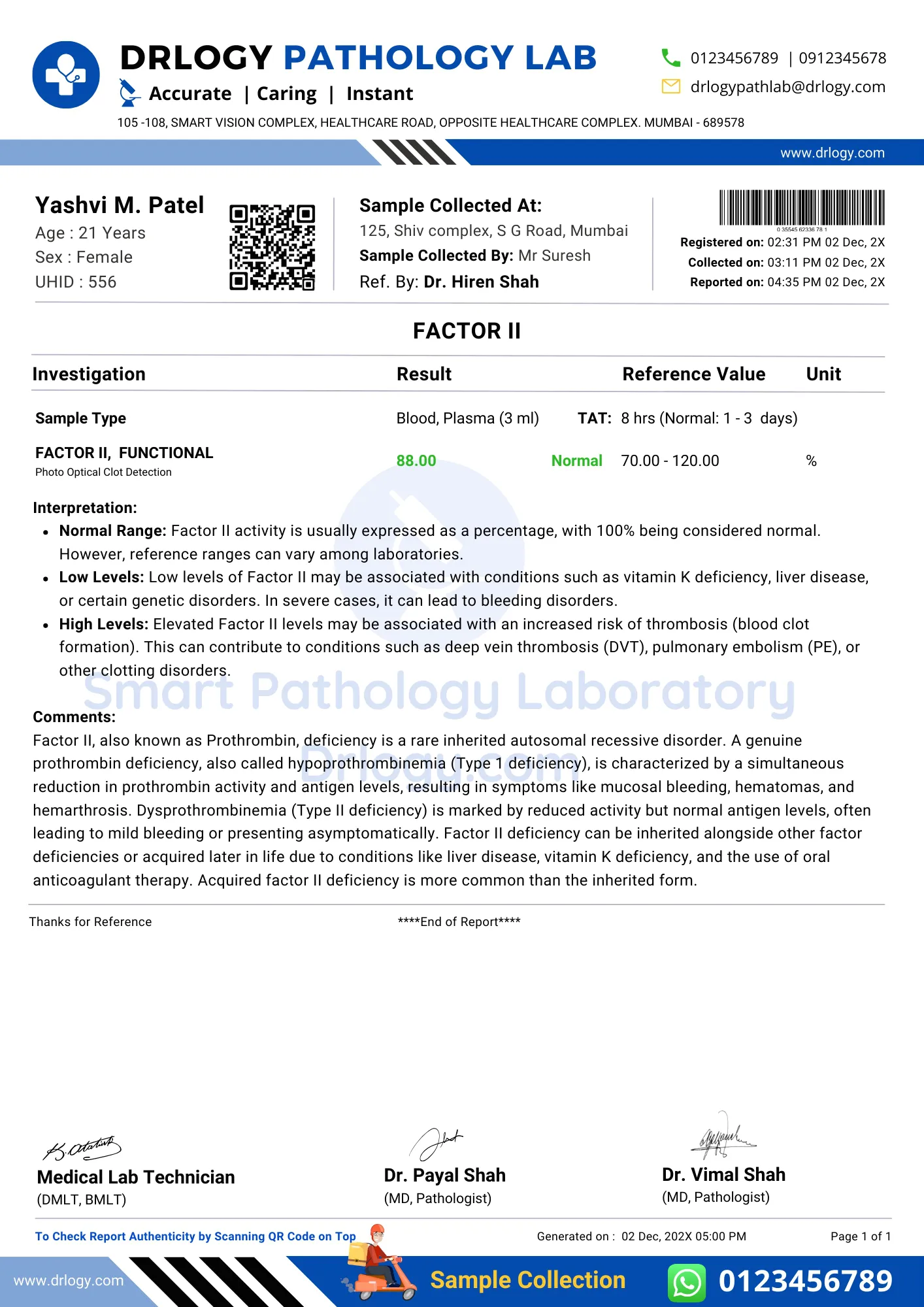
Factor II Mutation Test Normal Report
Factor II Mutation Test Abnormal Result Report
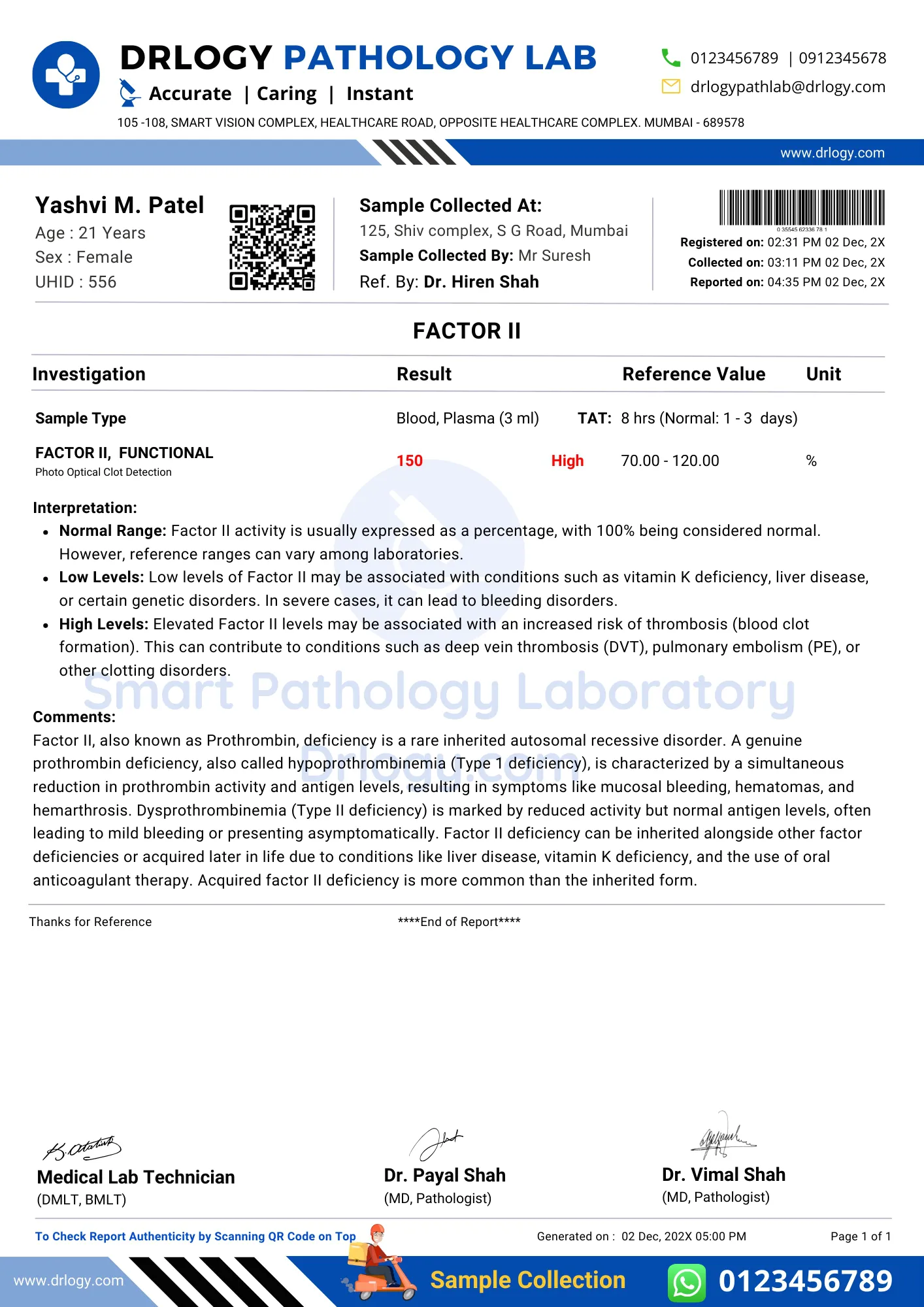
Factor II Mutation Test Abormal Report
Factor II Mutation Test Normal Range
Here is the normal range of the Factor II Mutation Test.
| Factor II Mutation Test | Normal Range |
|---|---|
| Factor II Activity | 70-120% |
Factor II Mutation Test Interpretation
Here is the Interpretation of the Factor II Mutation Test.
| Factor II Mutation Test | Result |
|---|---|
| Prothrombin Mutation | Detected |
| Prothrombin Mutation | Not Detected |
Factor II Mutation Test Detected Results
Here are the potential causes of detected Factor II Mutation Test results:
| Potential Causes | Description |
|---|---|
| Prothrombin G20210A Mutation | Detection of the specific genetic mutation. |
| Increased Clotting Risk | Elevated risk of abnormal blood clotting. |
| Genetic Inheritance | Inherited mutation from one or both parents. |
| Thrombotic Events | Personal or family history of blood clots. |
Factor II Mutation Test Not Detected Results
Here are the potential causes of not detected Factor II Mutation Test results:
| Potential Causes | Description |
|---|---|
| Absence of Mutation | The Prothrombin G20210A mutation is not present. |
| Reduced Clotting Risk | Lower risk of abnormal blood clotting related to this mutation. |
| Negative Family History | No family history of the mutation. |
| No Thrombotic Events | No personal or family history of blood clots related to this mutation. |
Specimen Requirements For Factor II Mutation Test
Here are the specimen requirements for the Factor II Mutation Test.
| Specimen | Serum | |
| Volume | 0.8 mL | |
| Container | Red-top tube or gel-barrier tube | |
| Collection | If a red-top tube is used, transfer separated serum to a plastic transport tube. | |
| Storage | Room temperature | |
| Sample Stability | Temperature | Period |
| Room temperature | 14 days | |
| Refrigerated | 14 days | |
| Frozen | 14 days | |
| Freeze/thaw cycles | Stable x6 | |
| Causes for Rejection | Sample type other than serum received. | |
Factor II Mutation Test is Safe?
Generally safe, involving a blood sample.
- Minimal risk of bleeding or infection.
- Safe for most individuals, but consult with a healthcare provider for specific concerns.
When Do You Get Factor II Mutation Test Results?
- Usually available within a few days to a week after the test is performed.
- The specific turnaround time can vary depending on the laboratory and healthcare provider.
Factor II Mutation Test Limitation
Here is the basic limitation of the Factor II Mutation Test.
- Medications can affect test results.
- Limited inentifying all clotting disorders.
- May not provide a complete assessment of clotting risk.
- Genetic factors can influence test interpretation.
- Other tests may be necessary for a comprehensive evaluation.
Factor II Mutation Test Risk Factors
Here are some of the risk factors of the Factor II Mutation Test.
- Family history of clotting disorders.
- Medications affecting clotting factors.
- Recent surgeries or trauma.
- Liver disease.
- Personal history of blood clots.
Doctor Recommendations After Factor II Mutation Test Result
Here are the Doctor's recommendations or consult a specialist after the Factor II Mutation Test.
| Factor II Mutation Test Result | Doctor to Visit | Reason |
|---|---|---|
| Not Detected | No need | N/A |
| Detected | Hematologist | Consultation & Management |
Factor II Mutation Test Price
Here are the estimated Factor II Mutation Test Prices in India with different top cities:
| City | Price Range (INR)* |
| 2000-4000 | |
| 2500-4000 | |
| 2000-4000 | |
| 2500-4000 | |
| 2000-4000 | |
| 2500-4000 | |
| 2000-4000 | |
| 2500-4000 | |
| 2500-4000 | |
| 2000-4000 | |
| 2500-4000 | |
| 2000-4000 | |
| 2500-4000 | |
| 2000-4000 |
*Factor II Mutation Test Price are approximate and vary depending on a specific laboratory or healthcare facility.
Summary
Overall, Factor II Mutation Test helps diagnose clotting disorders and inform treatment strategies. Also check Drlogy Test for detailed information about all medical tests for patients, doctors, scholers and medical students.
Reference
- Factor II (prothrombin) assay - UCSF Health [1].
- Factor II - Health Encyclopedia - URMC - University of Rochester [2].


