Drlogy
Healthcare organization
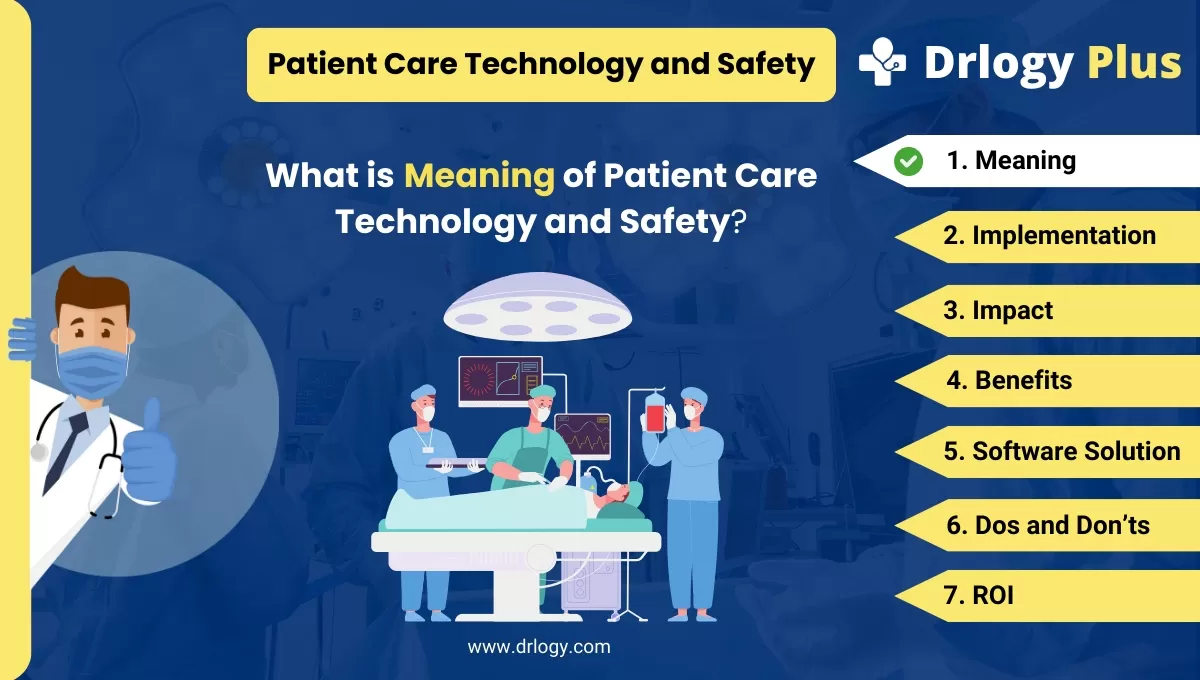
What is Patient Care Technology and Safety?
In today's digital age, online reputation plays a crucial in the success of healthcare providers. Patients often turn to the internet to research doctors and read reviews before choosing a healthcare provider, making it essential for doctors to proactively manage their reputation.
What is Patient Care Technology and Safety?
Patient care technology refers to the integration of innovative tools and digital solutions to enhance the overall healthcare experience for patients. This includes electronic health records (EHRs) for streamlined information access, telemedicine for remote consultations, and monitoring devices for real-time health data.
Such technology aims to improve diagnostic accuracy, treatment planning, and communication among healthcare providers, ultimately fostering a patient-centric approach.
Recommended
- Free Clinic Profile Listing to Make Expertise Visible to Millions of Patients.
- The Best Clinic Software for Technological Solutions for Doctors & Patient Safety
10 Importance of Patient Care Technology and Safety
Here are 10 importance of Patient Care Technology and Safety.
1. Enhanced Diagnostics and Treatment Planning
- Precise diagnostics for minimal errors.
- Tailored treatment plans for effectiveness.
- Predictive analytics for proactive interventions.
- Optimize resource use for cost-effectiveness.
- Streamlined workflows for efficiency.
Technology boosts precision in diagnostics, tailors treatments, predicts issues, optimizes resources, and streamlines workflows.
2. Remote Patient Monitoring
- Real-time surveillance for prompt actions.
- Timely interventions for reduced readmissions.
- Patient empowerment for active engagement.
- Chronic disease management for proactive care.
- Improved access for remote areas.
Remote monitoring allows real-time surveillance for prompt actions which is empowering patients in chronic care and enhancing accessibility.
3. Electronic Health Records (EHRs)
- Comprehensive data access for informed care.
- Coordinated care for collaboration.
- Patient safety through reduced errors.
- Data security for confidentiality.
- Time and cost efficiency.
Electronic Health Records (EHRs) streamline comprehensive patient information access for efficient and coordinated healthcare delivery.
4. Telemedicine and Virtual Consultations
- Improved access for remote areas.
- Timely consultations for reduced waiting.
- Cost-effective care for affordability.
- Continuity of care for chronic conditions.
- Increased patient satisfaction.
Telemedicine and virtual consultations offer convenient and accessible healthcare services through remote communication with healthcare professionals.
5. Medication Management
- Precision in prescriptions for accuracy.
- Automated reminders for adherence.
- Drug interaction alerts for safety.
- Improved compliance for effectiveness.
- Data-driven decision-making.
Medication management ensures precision in prescriptions, automated adherence reminders, and decision-making for effective healthcare outcomes.
6. Enhanced Communication Among Healthcare Teams
- Efficient information exchange for collaboration.
- Care coordination for holistic approaches.
- Reduced communication delays for responsiveness.
- Remote collaboration for flexibility.
- Interdisciplinary synergy for comprehensive care.
Fosters efficiency, coordination, and interdisciplinary synergy, optimizing patient care delivery.
7. Patient Education and Empowerment
- Accessible health info for awareness.
- Personalized resources for empowerment.
- Remote monitoring education for engagement.
- Health literacy enhancement for understanding.
- Continuous learning opportunities.
Leverage accessible health information, personalized resources, and continuous learning to enhance active engagement in healthcare decisions.
8. Enhanced Patient Safety Protocols
- Error reduction for safety.
- Automated alerts for quick actions.
- Adherence to protocols for standardization.
- Incident reporting for transparency.
- Patiententification measures for accuracy.
Patient safety protocols ensure error reduction, alerts, protocol adherence, reporting, and accurate patiententification.
9. Compliance with Regulatory Standards
- Data security compliance for privacy.
- Interoperability standards for seamless data exchange.
- Electronic prescribing compliance for accuracy.
- Telehealth regulation adherence for ethical delivery.
- Regular audits and assessments for continuous compliance.
For Patient Care Technology and Safety is essential for safeguarding patient data, maintaining privacy, and upholding the integrity of healthcare practices.
10. Continuous Technological Innovation
- A future-ready healthcare for adaptation.
- Improved outcomes through innovation.
- Research initiatives for development.
- Agility in adapting to change.
- Technological resilience for challenges.
Continuous technological innovation ensures healthcare's adaptability to future challenges, fostering improved outcomes and research-driven development.
Patient care technology and safety play a pivotal in modern healthcare. From enhancing diagnostics and treatment planning to ensuring compliance with regulatory standards and fostering continuous innovation, the integration of technology leads to more accurate, personalized, and secure patient care.
Patient Care Technology and Safety
Here are 7 main Patient Care Technology and Safety Guide Strategies.
| 1. Meaning | 2. Implementation |
| 3. Impact | 4. Benefits |
| 5. Software Solution | 6. Dos and Don’ts |
| 7. ROI |
Summary
Moreover, From enhanced diagnostics to regulatory compliance, experience the benefits of secure, personalized care for improved outcomes.
Check Drlogy Plus Academy to get all answers related to hospitals, labs, clinics and patient management with all in one solution.