Drlogy
Healthcare organization
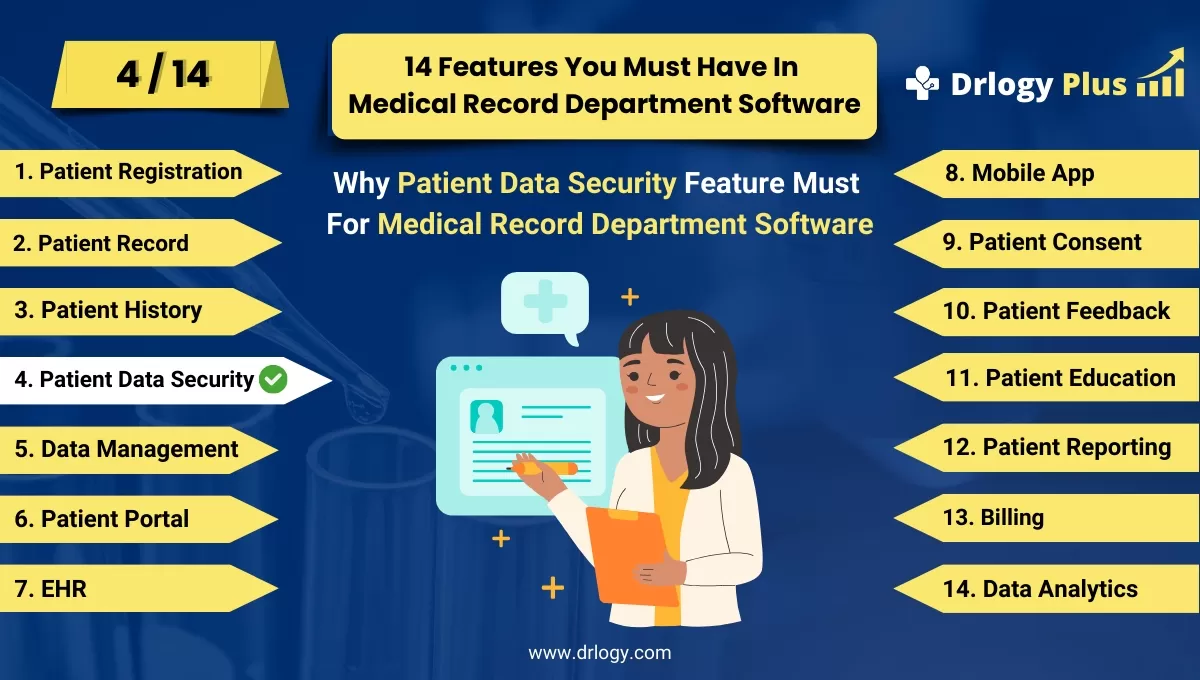
Why Data Security Feature Must In Medical Record Department Software
Data security is paramount in medical record management to protect sensitive patient information and comply with privacy regulations.
Check:
Advanced security features in medical record department software ensure data confidentiality, integrity, and availability while mitigating potential threats.
Check:
10 Best Patient Registration Features for Medical Record Department Software
Check 10 Best Patient Registration Features for Medical Record Department Software.
1. End-to-End Data Encryption
- Encrypts patient data during transmission and storage to prevent unauthorized access.
- Utilizes industry-standard protocols like AES-256 for robust encryption.
- Ensures encryption keys are securely managed and rotated periodically.
- Protects data from interception during network communication.
- Complies with global standards like HIPAA and GDPR for encryption practices.
2. Role-Based Access Control (RBAC)
- Restricts data access based on users, such as doctors, nurses, and administrators.
- Provides customizable permissions to meet specific organizational needs.
- Prevents unauthorized users from accessing sensitive patient records.
- Tracks and logs user activity to enhance accountability.
- Limits access to only the data required for a user's job responsibilities.
3. Multi-Factor Authentication (MFA)
- Requires multiple credentials for system access, such as passwords and OTPs.
- Enhances security by reducing reliance on passwords alone.
- Supports biometric authentication, like fingerprints or facial recognition.
- Offers options for app-based or SMS-based authentication codes.
- Prevents unauthorized logins, even if passwords are compromised.
4. Data Backup and Disaster Recovery
- Performs regular automated backups to secure cloud or on-premises servers.
- Ensures quick data recovery in case of system failures or cyberattacks.
- Provides multiple recovery points to restore data to a specific timeframe.
- Maintains redundancy through geographically distributed backup systems.
- Enhances operational continuity with robust disaster recovery plans.
5. Audit Trails and Activity Logs
- Tracks every access, modification, and deletion of patient records.
- Provides detailed logs for compliance and security audits.
- Detects and alerts unusual activity patterns for proactive responses.
- Ensures accountability by linking actions to specific users.
- Facilitates transparency and monitoring for regulatory adherence.
6. Secure Cloud Storage
- Utilizes highly encrypted cloud environments for data storage.
- Provides geographically distributed servers for redundancy and failover support.
- Offers controlled access to cloud data through authentication mechanisms.
- Protects against data breaches with advanced security protocols.
- Ensures compliance with regional and international healthcare regulations.
7. Regular Security Updates and Patch Management
- Ensures the software is updated to address known vulnerabilities.
- Implements automated patch management systems for seamless updates.
- Keeps the system compliant with the latest security standards.
- Protects against new and emerging cyber threats like malware and ransomware.
- Involves regular penetration testing toentify and fix weak points.
8. Data Anonymization and Masking
- Removes or masks personallyentifiable information (PII) for research purposes.
- Protects sensitive data when sharing records externally.
- Complies with privacy laws requiring the anonymization of patient data.
- Ensures real patiententities are not exposed during system development or testing.
- Reduces risks of misuse ofentifiable health information.
9. Intrusion Detection and Prevention Systems (IDPS)
- Monitors network traffic for suspicious activities or potential threats.
- Provides real-time alerts for unusual access attempts.
- Blocks malicious traffic to prevent data breaches and system compromises.
- Integrates with firewalls and antivirus systems for layered security.
- Continuously updates threat databases to defend against evolving attacks.
10. Compliance with Security Standards and Certifications
- Adheres to globally recognized security standards like ISO 27001 and NIST.
- Demonstrates compliance with healthcare-specific regulations like HIPAA, GDPR, or HITECH.
- Ensures regular third-party audits to validate security measures.
- Displays certifications to build trust with patients and stakeholders.
- Keeps the organization prepared for regulatory inspections and assessments.
Drlogy Medical Record Department Software Features Guide
Check the Top 14 features of Medical Record Department Software Your Hospital Should Have.
Summary
Overall, Strong data security features in medical record department software safeguard sensitive information, ensuring patient privacy, regulatory compliance, and trust in healthcare systems.
Check Drlogy Medical Record Department Software Features Guide for efficient inpatient management and enhanced patient care for your clinics and hospitals for patient management.