Drlogy
Healthcare organization
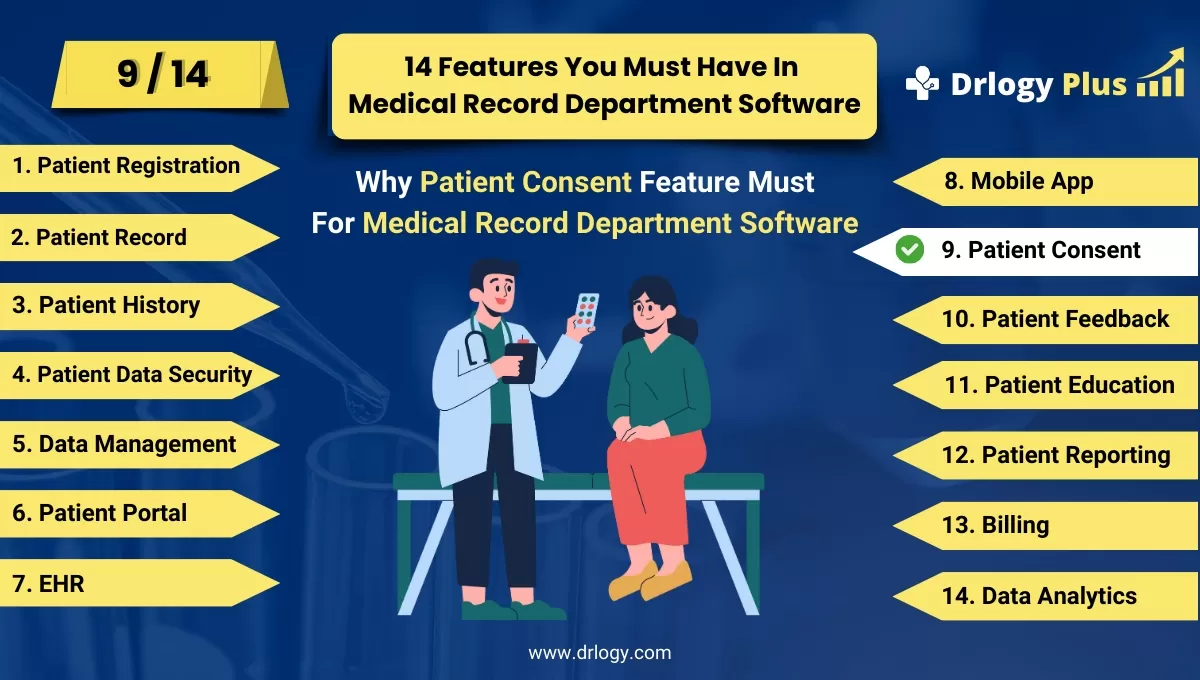
Why Consent Management Feature Must In Medical Record Department Software
Consent management is a cornerstone of ethical and compliant healthcare delivery, ensuring patients understand and agree to treatments and data usage.
Check:
By incorporating these features, software can streamline the process and enhance trust.
Check:
10 Best Consent Management Features for Medical Record Department Software
Check 10 Best Consent Management Features for Medical Record Department Software.
1. Comprehensive Consent Templates
- Offer pre-built templates for various consent types, such as general, surgical, and research.
- Include customizable fields to adapt to specific organizational needs.
- Support multi-language templates for diverse patient populations.
- Provide clear instructions and definitions for patients to understand consent terms.
- Ensure compliance with legal and ethical standards, like HIPAA and GDPR.
2. Digital Consent Capture
- Allow patients to sign consent forms electronically using e-signatures.
- Enable touch-screen compatibility for signatures on mobile and tablet devices.
- Provide secure PIN or biometric options for verification before signing.
- Save digital signaturesectly to patient records for easy retrieval.
- Ensure encryption of all captured consent data to prevent breaches.
3. Consent Tracking and Management
- Maintain a centralized dashboard for tracking all consent forms.
- Include timestamps to record when and by whom consent was provided.
- Allow easy updates or revocations of consent with proper authorization.
- Alert staff about expiring or missing consents for timely renewal.
- Integrate audit trails to monitor consent activity for compliance.
4. Role-Based Access Control (RBAC)
- Restrict access to consent records based on users (e.g., admin, doctor, or nurse).
- Allow-specific permissions for viewing, editing, or revoking consent.
- Provide granular control over which departments can access specific consent types.
- Include audit logs to track who accessed or modified consent data.
- Enhance privacy by limiting sensitive consent information to authorized personnel.
5. Patient Portal Integration
- Enable patients to review and sign consents through a secure portal.
- Provide explanatory videos or documents to help patients understand the terms.
- Offer consent renewal or revocation options within the portal.
- Include notifications to inform patients about pending consents.
- Allow patients to download signed consent forms for their records.
6. Customizable Expiry and Renewal Alerts
- Automatically notify patients and staff about expiring consents.
- Allow customization of alert timelines to fit organizational policies.
- Send alerts through multiple channels, such as email, SMS, or in-app notifications.
- Ensure notifications include links to renew or update consents.
- Track responses to alerts for follow-up if required.
7. Compliance and Legal Documentation
- Include features to ensure consent forms align with local, national, and international regulations.
- Automatically update templates based on regulatory changes.
- Provide audit-ready reports for compliance verification.
- Include clauses and disclosures mandated by governing bodies.
- Maintain a library of legal references for staff education and policy updates.
8. Consent Revocation Management
- Allow patients to withdraw consent easily through the portal or app.
- Notify relevant departments immediately upon consent revocation.
- Track and archive revoked consents for legal purposes.
- Restrict further data usage related to revoked consents.
- Provide a clear process for handling partial revocations.
9. Multi-Language and Accessibility Support
- Provide consent forms in multipleuages to cater to diverse populations.
- Include text-to-speech options for visually impaired patients.
- Use simpleuage to ensure easy understanding of consent terms.
- Support large-font and high-contrast modes for accessibility.
- Ensure compatibility with assistive devices like screen readers.
10. Integration with EHR and Other Systems
- Sync consent data with the EHR for seamless access during care delivery.
- Integrate with scheduling systems to ensure consents are signed before appointments or procedures.
- Automate workflows to verify consent before initiating treatments.
- Provide APIs for connecting consent management to third-party tools.
- Ensure real-time updates between systems for the latest consent status.
Drlogy Medical Record Department Software Features Guide
Check the Top 14 features of Medical Record Department Software Your Hospital Should Have.
Summary
Overall, Incorporating these 10 features into consent management software ensures a secure, user-friendly, and legally compliant system that benefits both patients and healthcare providers.
Check Drlogy Medical Record Department Software Features Guide for efficient inpatient management and enhanced patient care for your clinics and hospitals for patient management.