Drlogy
Healthcare organization
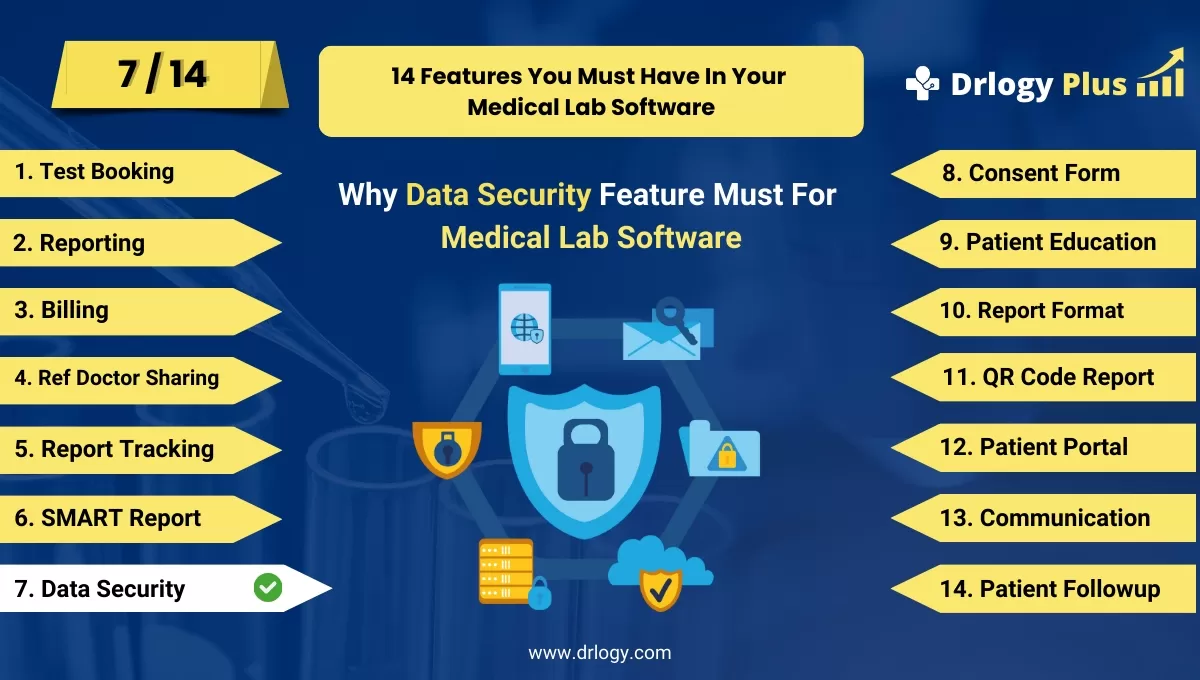
Why Data Security Feature Must For Medical Lab Software
Data security is a critical component of medical lab software to protect sensitive patient information and maintain compliance with healthcare regulations.
Check
The right features can safeguard patient data, ensure privacy, and prevent unauthorized access to medical records, enhancing the trust and reliability of lab operations.
10 Best Data Security Features For Medical Lab Software
Here are 10 Best Data Security features For Medical Lab Software.
1. End-to-End Data Encryption
- Ensures that all data is encrypted both in transit and at rest, preventing unauthorized access.
- Uses advanced encryption algorithms like AES for optimal security.
- Protects sensitive patient information from interception or breach during transfer.
- Ensures compliance with healthcare standards for patient data security.
- Maintains the confidentiality of patient data, even in the event of a network breach.
2. Multi-Factor Authentication (MFA)
- Requires multiple verification methods (e.g., password, phone, or biometric) to access the system.
- Adds an extra layer of security beyond just a username and password.
- Prevents unauthorized access, even if login credentials are compromised.
- Strengthens overall security by ensuring only verified users can access lab data.
- Reduces the risk of cyberattacks such as phishing and brute force login attempts.
3. Role-Based Access Control (RBAC)
- Limits user access to specific data based on their within the organization.
- Ensures that sensitive information is only accessible to authorized personnel, such as lab technicians or doctors.
- Customizes access levels for different user groups to enhance security.
- Helps in compliance with privacy laws by minimizing unnecessary exposure of patient data.
- Reduces the risk of insider threats by restricting access to critical information.
4. Audit Trails and Logging
- Tracks every action taken within the system, including who accessed, modified, or viewed data.
- Provides a detailed record of user activity for auditing and compliance purposes.
- Helps detect and investigate suspicious activities or data breaches.
- Ensures accountability by maintaining logs of every user interaction with the system.
- Improves transparency and security by monitoring data access in real-time.
5. Data Backup and Disaster Recovery
- Regularly backs up data to secure, off-site locations to prevent data loss.
- Ensures that patient records are recoverable in the event of system failures or cyberattacks.
- Automates the backup process to minimize human error and ensure continuous data protection.
- Includes disaster recovery protocols to restore operations quickly after a data loss event.
- Reduces downtime and ensures uninterrupted service in case of an emergency.
6. Data Anonymization and Masking
- Replaces personallyentifiable information (PII) with anonymized data during analysis or sharing.
- Protects patient privacy by ensuring sensitive data is not exposed in non-critical processes.
- Allows for safe data sharing with external parties for research without compromising patiententities.
- Helps labs maintain compliance with regulations regarding patient data privacy.
- Enhances security while still allowing for the use of data for operational purposes.
7. Automatic System Lockouts
- Locks out the system after multiple failed login attempts to prevent brute force attacks.
- Limits unauthorized users from gaining access by guessing credentials.
- Configurable lockout settings allow the admin to set limits on failed attempts before locking the system.
- Enhances security by blocking suspicious activities and potential cyber threats.
- Provides an additional safeguard against hacking and unauthorized access attempts.
8. Secure Data Sharing Protocols
- Ensures that data shared with external systems or healthcare providers is encrypted and secure.
- Uses secure protocols such as HTTPS and VPNs for data transfers between labs and external entities.
- Prevents unauthorized interception or modification of data during sharing processes.
- Enables secure collaborations with reference doctors, hospitals, and insurance companies.
- Protects patient data integrity during exchanges between medical entities.
9. Regular Security Updates and Patches
- Ensures that the software is always up-to-date with the latest security features and patches.
- Automatically installs critical security updates to prevent vulnerabilities from being exploited.
- Provides proactive defense against emerging cyber threats and new hacking techniques.
- Reduces the risk of outdated software being compromised due to known vulnerabilities.
- Strengthens the overall security infrastructure of the medical lab system.
10. Compliance with Healthcare Regulations
- Ensures that the software complies with industry-specific regulations like HIPAA, GDPR, and HITECH.
- Implements necessary security measures such as data encryption, access control, and secure storage.
- Provides built-in compliance reporting tools to demonstrate adherence to legal requirements.
- Helps avoid costly fines and penalties associated with non-compliance.
- Protects patient data by meeting the highest standards of healthcare data security.
14 Steps Guide For Medical Lab Software
Here are 14 Steps Guide For Medical Lab Software.
| 1. Billing | 8. Consent Form |
| 2. Reporting | 9. Patient Education |
| 3. Billing | 10. Report Format |
| 4. Ref Doctor Sharing | 11. QR Code Report |
| 5. Report Tracking | 12. Patient Portal |
| 6. SMART Report | 13. Billing |
| 7. Data Security | 14. Patient Followup |
Summary
Overall, Medical lab software with strong data security features, such as encryption,-based access, and regular security updates, helps protect patient information, ensuring compliance with healthcare regulations and minimizing the risk of data breaches.
Also, Check our complete 14 steps Drlogy Medical Lab Software Buying Guide guide to make an informed decision and streamline your diagnostic Lab growth and Lab management and growth.