Drlogy
Healthcare organization
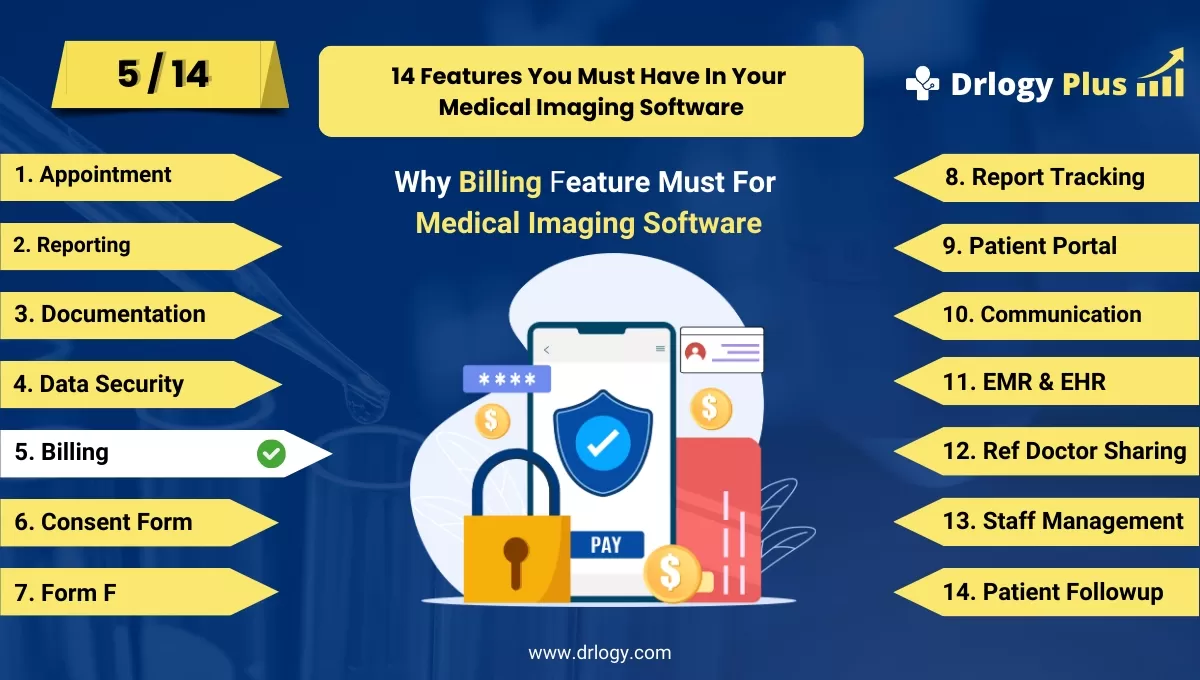
Why Billing Feature Must In Medical Imaging Software
Efficient billing features in medical imaging software are crucial for streamlining financial operations and ensuring accurate, timely payments.
Check:
These features help healthcare facilities reduce administrative burdens, minimize errors, and improve revenue management.
10 Best Billing Features For Medical Imaging Software
Check 10 Best Billing Features for Medical Imaging Software.
1. Automated Billing and Invoicing
- Automatically generates bills and invoices after imaging procedures are completed.
- Reduces manual entry errors and streamlines the billing process for staff.
- Customizes invoices to include detailed information on procedures and costs.
- Saves time by automating repetitive billing tasks, improving efficiency.
- Enhances accuracy by integratingectly with procedure codes and patient data.
2. Insurance Management
- Automatically verifies patient insurance details before appointments or procedures.
- Simplifies the insurance process by submitting claimsectly to insurers through the software.
- Reduces compexity by validating patient information and coverage in advance.
- Speeds up reimbursement by streamlining communication with insurance providers.
- Ensures accuracy in claims submissions by adhering to insurer-specific requirements.
3. Procedure Code Integration
- Integrates standard medical billing codes like CPT, ICD-10, and HCPCS for accurate invoicing.
- Automatically links imaging procedures to the correct billing codes, minimizing errors.
- Ensures compliance with regulatory standards for coding and billing.
- Speeds up the billing process by eliminating manual code entry.
- Helps avoid claim rejections due to incorrect or missing procedure codes.
4. Customizable Billing Rules
- Allows the creation of custom billing rules based on procedures, insurance types, or patient categories.
- Provides flexibility in billing for different imaging services or complex cases.
- Ensures that all charges are correctly applied according to specific billing guidelines.
- Supports the creation of special rates for contracts, discounts, or institutional clients.
- Improves revenue management by applying consistent billing practices.
5. Real-Time Payment Tracking
- Tracks payments in real-time, providing up-to-date billing status for patients and providers.
- Displays outstanding balances, partial payments, and payment histories clearly.
- Improves financial transparency by offering detailed reports on payment activity.
- Helps reduce overdue payments by notifying staff of pending or late bills.
- Enhances cash flow management by giving a clear overview of current revenue.
6. Multiple Payment Options
- Supports a variety of payment methods, including credit/debit cards, bank transfers, and mobile payments.
- Enables patients to pay bills online through a secure portal for convenience.
- Provides flexible payment plans for patients who need to spread out payments over time.
- Reduces administrative work by offering automated payment processing for recurring bills.
- Increases patient satisfaction by offering a variety of easy, secure payment options.
7. Patient Cost Estimates
- Generates cost estimates for imaging procedures based on insurance coverage and patient-specific factors.
- Provides transparency for patients by detailing out-of-pocket expenses before procedures.
- Helps patients make informed decisions by giving accurate cost breakdowns.
- Reduces confusion about billing by explaining costs upfront.
- Enhances trust between patients and providers through clear communication about pricing.
8. Billing Analytics and Reporting
- Offers detailed reports on revenue, unpaid bills, and billing efficiency.
- Tracks key metrics like collection rates, average payment times, and claim rejection rates.
- Helpsentify bottlenecks in the billing process and improve operational efficiency.
- Provides insights into financial performance with real-time data.
- Assists in making decisions to improve revenue cycle management.
9. Recurring Billing for Long-Term Procedures
- Supports automated recurring billing for patients undergoing long-term treatment or follow-up procedures.
- Reduces administrative effort by eliminating the need to manually bill repeat services.
- Ensures timely payments by setting up automated billing cycles.
- Simplifies the payment process for patients undergoing ongoing diagnostic imaging.
- Increases efficiency in managing billing for frequent or recurring imaging procedures.
10. Audit Trail for Billing Transactions
- Keeps a detailed log of all billing activities, including modifications and payments.
- Ensures compliance with financial regulations by tracking all billing actions.
- Provides transparency in case of billing disputes, with a complete record of transaction history.
- Helps auditors review financial transactions easily for accuracy and compliance.
- Enhances accountability by tracking who made billing changes and when.
Drlogy Medical Imaging Software Features Guide
Here's a full guide for the 14 best Medical Imaging Software features.
| 1. Billing | 8. Report Tracking |
| 2. Reporting | 9. Patient Portal |
| 3. Documentation | 10. Communication |
| 4. Data Security | 11. EMR & EHR |
| 5. Billing | 12. Ref Doctor |
| 6. Consent Form | 13. Staff |
| 7. Form F | 14. Patient Followup |
Summary
Overall, Incorporating these billing features in medical imaging software streamlines the payment process, improves accuracy, and ensures better financial management for both patients and healthcare providers.
Check Drlogy Medical Imaging Software Features Guide provides a detailed overview of key features to optimize medical imaging centers operations and improve patient management efficiency.