Drlogy
Healthcare organization
10 Best Digital Marketing Ideas for Your Lab Marketing
Digital marketing is essential in today’s competitive healthcare landscape. It helps pathology labs reach a larger audience, engage with patients effectively, and ultimately drive more appointments.
Check:
Here are some of the best digital marketing suggestions to boost your lab's presence and credibility.
10 Best Digital Marketingeas for Your Lab Marketing
Here are 10 Best Digital Marketingeas for Your Lab Marketing.
1. Search Engine Optimization (SEO)
- Optimize for Local SEO: Ensure your lab appears in local search results by optimizing your website for keywords like "pathology lab near me" or "best diagnostic services in [city]."
- Focus on On-Page SEO: Optimize your website’s content, meta descriptions, headings, and images to rank higher in search engines, making it easier for patients to find your services.
- Use Structured Data: Implement schema markup on your website to help search engines understand your lab's services, improving visibility on search result pages.
- Create Location-Specific Pages: If your lab has multiple locations, create separate pages for each location to target specific local keywords and attract patients from different areas.
- Content Creation: Regularly add high-quality content to your website, including blog posts on medical tests, health tips, and new developments in diagnostics, to drive more organic traffic.
SEO helps your lab appear in search results, making it easier for potential patients to find and choose your services.
2. Pay-Per-Click (PPC) Advertising
- Target Specific Test Keywords: Run PPC campaigns targeting high-intent keywords such as “blood test near me” or “MRI diagnostics in [city].”
- Local Geotargeting: Use location-based targeting in Google Ads to ensure your ads only reach patients in your local area, increasing the likelihood of conversions.
- Utilize Remarketing: Set up remarketing campaigns to target visitors who have previously visited your website but didn’t book an appointment, encouraging them to return and complete their booking.
- Optimize Landing Pages: Ensure your PPC adsect visitors to optimized landing pages with clear calls to action and easy booking options.
- Monitor and Adjust Campaigns: Regularly review your PPC campaigns’ performance to optimize ad spending and improve ROI, focusing on high-performing keywords.
PPC advertising allows your lab to reach potential patientsectly, driving traffic to your website and increasing conversions.
3. Social Media Marketing
- Engage with Your Audience: Respond to comments and messages, and engage in discussions on platforms like Facebook, Instagram, and Twitter to build a community around your lab.
- Share Informative Content: Post regular content about health tips, the importance of routine tests, and the latest advancements in diagnostics to educate your audience.
- Leverage Patient Testimonials: Share positive patient reviews and testimonials on social media to build trust and credibility with your followers.
- Run Paid Social Media Ads: Use Facebook and Instagram ads to promote special offers or highlight specific services, targeting users based on demographics and location.
- Host Live Q&A Sessions: Organize live sessions with lab experts to answer common health questions, showcasing your lab’s expertise and fostering trust with potential patients.
Social media marketing helps build trust, engage patients, and enhance your lab’s online presence by connecting with a wider audience.
4. Email Marketing Campaigns
- Send Appointment Reminders: Use email marketing to send timely reminders to patients for upcoming tests or annual health checkups, improving patient retention.
- Share Health Tips and Updates: Keep your patients informed about important health topics, new diagnostic services, and lab news through monthly newsletters.
- Offer Exclusive Discounts: Use email campaigns to offer special discounts or promotions to loyal patients, encouraging them to return for future testing.
- Segment Your Audience: Create email lists based on patient preferences and past services to send personalized messages that resonate with different segments.
- Automate Campaigns: Set up automated email sequences for patient follow-ups, pre-appointment reminders, and post-visit surveys to maintain ongoing communication.
Email marketing helps maintain patient engagement by delivering personalized messages, timely reminders, and valuable content.
5. Content Marketing
- Start a Blog: Regularly publish blog posts related to health and diagnostics, such as the importance of early disease detection or new testing technologies. This can drive organic traffic to your website.
- Create Patient Success Stories: Share patient testimonials and success stories, illustrating how your lab’s accurate diagnostics helped patients find the right treatment.
- Develop In-Depth Guides: Write comprehensive guides on diagnostic tests, explaining the procedure, the conditions it helps diagnose, and how it benefits patients.
- Use Video Content: Create informative videos that explain lab procedures, how patients can prepare for specific tests, and the significance of different diagnostic services.
- Guest Blogging: Contribute guest posts to healthcare-related blogs, linking back to your lab’s website and building your authority in the field.
Content marketing educates your audience and positions your lab as an authority, driving more organic traffic to your website.
6. Online Reputation Management
- Monitor Online Reviews: Keep track of online reviews on platforms like Google, Yelp, and Facebook. Respond to positive and negative reviews to show that you value patient feedback.
- Encourage Happy Patients to Leave Reviews: Actively encourage satisfied patients to leave reviews by sending them follow-up emails after their tests.
- Respond Professionally to Negative Feedback: Address any negative reviews with empathy and professionalism, offering solutions to resolve patient concerns.
- Showcase Your Reputation: Highlight positive reviews on your website and social media to build credibility and attract new patients.
- Implement a Patient Satisfaction Survey: Use online surveys to collect feedback from patients about their experience at your lab, helping you continuously improve your services.
Online reputation management builds trust and credibility, which is essential for attracting new patients and maintaining a positive image.
7. Google My Business Optimization
- Claim and Optimize Your Listing: Ensure your Google My Business (GMB) listing is claimed and up-to-date with accurate contact details, hours, services, and photos of your lab.
- Encourage Reviews: Ask satisfied patients to leave reviews on your GMB page. Positive reviews improve your lab’s ranking and attract more patients.
- Use Posts for Updates: Post regular updates on your GMB profile about new services, health tips, or upcoming events to keep your audience engaged.
- Add Photos and Videos: Include high-quality images and videos showcasing your lab, team, and facilities to build trust with potential patients.
- Enable Messaging: Activate the messaging feature on GMB so patients can contact your labectly through the listing, streamlining appointment bookings.
Google My Business optimization helps your lab stand out in local search results and makes it easy for patients to find and contact you.
8. Influencer Partnerships
- Partner with Local Influencers: Collaborate with local influencers or healthcare professionals who have a strong online following to promote your lab and its services.
- Offer Free Services for Exposure: Offer free or discounted diagnostic services to influencers in exchange for social media posts and reviews about your lab.
- Collaborate on Health Campaigns: Team up with influencers to run health awareness campaigns on social media, raising your lab’s visibility and educating the public.
- Track Campaign Performance: Measure the impact of influencer partnerships by tracking website traffic, social media engagement, and the number of bookings generated through the campaign.
- Use Micro-Influencers: Partner with micro-influencers in the healthcare space who have smaller but highly engaged audiences, providing a cost-effective way to market your lab.
Influencer partnerships can increase brand awareness and help reach new audiences through trusted voices in the healthcare community.
9. Mobile App Marketing
- Develop a Lab App: Create a mobile app that allows patients to book appointments, access test results, and track their health metrics.
- Promote App Features: Use your website, social media, and email marketing to promote the benefits of your mobile app, encouraging patients to download and use it.
- Send Push Notifications: Use push notifications to send reminders for upcoming tests, health tips, or updates about new services, keeping your lab top-of-mind.
- Offer In-App Promotions: Provide special discounts or exclusive offers through the app to encourage users to book tests or refer others to your lab.
- Simplify Payment Options: Integrate easy payment gateways in your app to allow patients to pay for servicesectly, enhancing convenience and patient satisfaction.
A mobile app enhances the patient experience by offering easy access to services, test results, and personalized communication.
10. Webinars and Online Workshops
- Host Educational Webinars: Organize webinars on important health topics, such as preventive healthcare or understanding lab results. Use these sessions to build trust and educate your audience.
- Collaborate with Experts: Partner with doctors or medical specialists to host webinars, leveraging their authority to attract more attendees.
- Promote Through Email & Social Media: Use email marketing and social media to promote your upcoming webinars, creating a buzz and encouraging sign-ups.
- Offer Q&A Sessions: Include live Q&A segments in your webinars to engage attendees and answer their questions about diagnostic services and healthcare.
- Record and Share: Record your webinars and share them on your website and social media channels, allowing people who missed the live session to watch them later.
Webinars and online workshops provide valuable education, helping you connect with potential patients and position your lab as a trusted resource.
Bonus Tools For Lab Marketing:
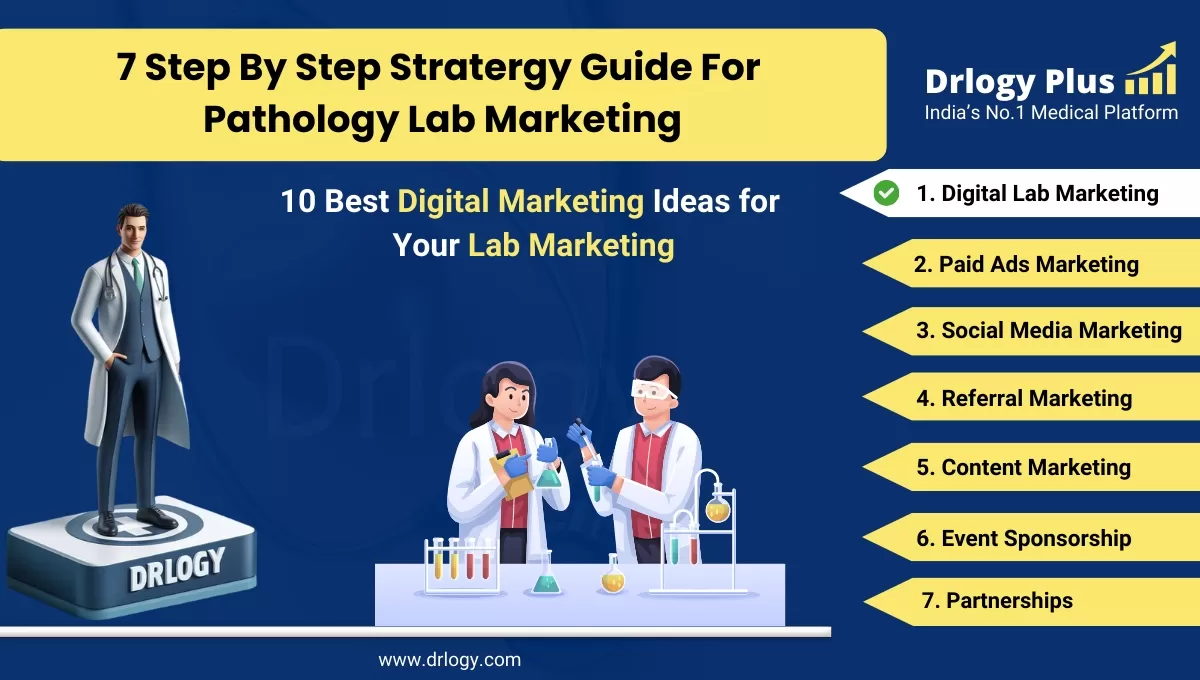
7 Steps Guide For Pathology Lab Marketing
Here are 7 Steps Guide For Pathology Lab Marketing.
| Lab Marketing Strategy |
|---|
| 1. Digital Marketing |
| 2. Paid Ads Marketing |
| 3. Social Media Marketing |
| 4. Referral Marketing |
| 5. Content Marketing |
| 6. Event Sponsorship Marketing |
| 7. Partnerships with Healthcare Providers |
Summary
Overall, Implementing digital marketing strategies like SEO, social media, and email campaigns can significantly boost your lab’s visibility, enhance patient trust, and drive growth.
Check Drlogy Pathology Lab Marketing Guide for effective strategies to enhance your lab's marketing and enhancement to gain trust and more trustability for lab growth.