Drlogy
Healthcare organization
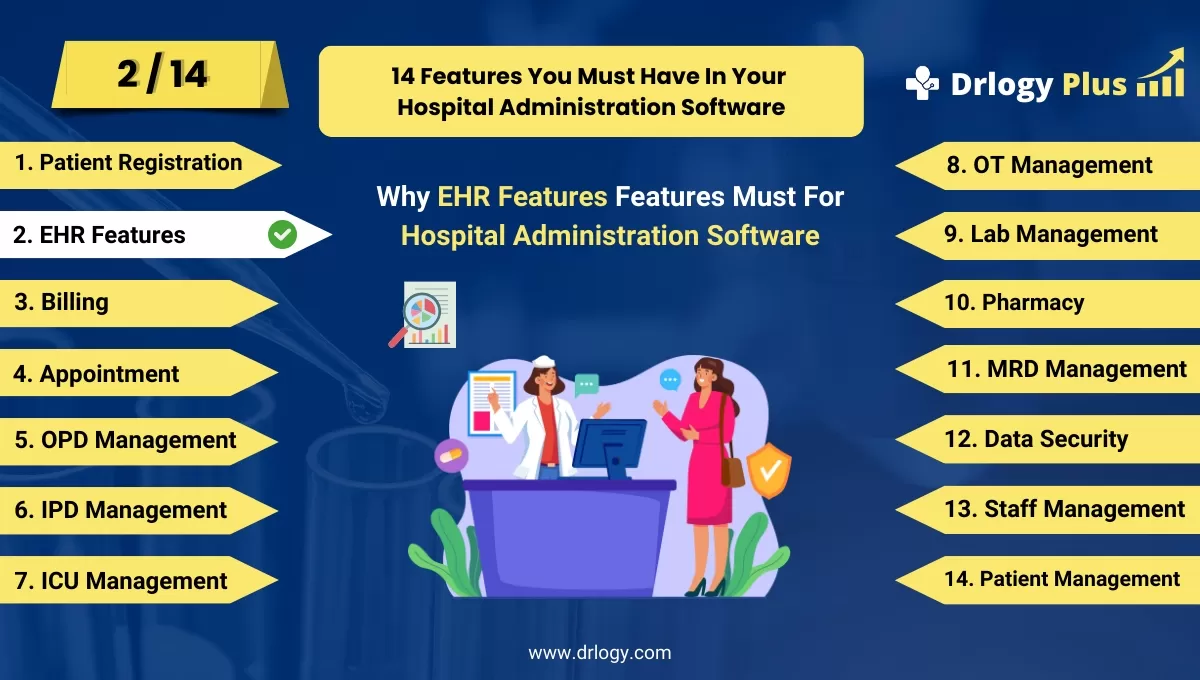
Why EHR Features For Hospital Administration Software
The Electronic Health Record (EHR) feature is vital for modernizing hospital administration by centralizing patient data, improving care quality, and enhancing operational efficiency.
Recommended
It ensures accurate documentation, seamless integration, and better compliance with regulatory standards.
10 Reasons Why EHR Feature Must For Hospital Administration Software
Here are 10 Reasons Why EHR Feature Must For Hospital Administration Software.
1. Centralized Patient Information
- Unified Records: Consolidates all patient data into a single, easily accessible system.
- Comprehensive View: Provides a complete view of patient history, including medical, surgical, and treatment records.
- Quick Access: Enables healthcare providers to access patient information from any location within the hospital.
- Reduced Duplication: Minimizes duplicate tests and procedures by providing a comprehensive record of past interactions.
- Streamlined Communication: Enhances coordination between different departments with shared patient data.
2. Improved Patient Care
- Informed Decision-Making: Provides complete patient history and current health status to inform clinical decisions.
- Real-Time Updates: Allows for real-time updates on patient conditions and treatment plans.
- Personalized Treatment: Facilitates customized care plans based on detailed patient records and past treatments.
- Error Reduction: Reduces the risk of medical errors with accurate and complete information at the point of care.
- Enhanced Monitoring: Supports continuous monitoring of patient progress and response to treatments.
3. Enhanced Efficiency
- Automated Workflows: Streamlines administrative tasks such as scheduling, billing, and documentation.
- Reduced Paperwork: Eliminates the need for physical records, reducing administrative burden and clutter.
- Faster Data Entry: Speeds up data entry with pre-filled templates and automated updates.
- Efficient Record Retrieval: Allows quick retrieval of patient records and historical data for consultations and reviews.
- Optimized Resource Use: Improves utilization of hospital resources by integrating patient data with scheduling and inventory systems.
4. Regulatory Compliance
- Adherence to Standards: Ensures compliance with healthcare regulations such as HIPAA and GDPR for data privacy and security.
- Accurate Documentation: Maintains accurate and complete documentation required for legal and regulatory purposes.
- Audit Trails: Provides detailed logs of data access and modifications for auditing and compliance verification.
- Consent Management: Manages patient consents and approvals digitally, ensuring compliance with consent regulations.
- Reporting Capabilities: Facilitates compliance reporting with automated generation of required documentation.
5. Enhanced Data Security
- Encryption: Protects patient data with encryption to prevent unauthorized access.
- Access Controls: Implements-based access controls to ensure only authorized personnel can view or modify sensitive information.
- Secure Authentication: Utilizes secure authentication methods to verify userentities.
- Data Backup: Regularly backs up patient data to prevent loss and ensure recovery in case of system failures.
- Compliance with Standards: Adheres to industry standards for data protection and security.
6. Improved Patient Engagement
- Patient Portals: Provides patients with access to their health records, test results, and treatment plans through secure online portals.
- Appointment Management: Allows patients to schedule, reschedule, and cancel appointments online.
- Educational Resources: Offers access to educational materials and resources related to their health conditions.
- Communication Tools: Facilitates communication between patients and healthcare providers through secure messaging.
- Self-Management: Empowers patients to take an active in managing their health and care plans.
7. Data Analytics and Reporting
- Performance Metrics: Provides insights into hospital performance and patient outcomes through detailed analytics.
- Custom Reports: Generates custom reports for clinical, operational, and financial analysis.
- Trend Analysis:entifies trends and patterns in patient data to inform strategic planning and improve care delivery.
- Operational Insights: Offers insights into workflow efficiency, resource utilization, and patient care quality.
- Decision Support: Supports decision-making with insights and predictive analytics.
8. Seamless Integration
- Interoperability: Integrates with other hospital systems such as laboratory, radiology, and pharmacy systems for a cohesive workflow.
- Data Sharing: Facilitates secure data sharing between different departments and external healthcare providers.
- System Compatibility: Ensures compatibility with other electronic health record systems for smooth data exchange.
- API Support: Provides APIs for integrating with third-party applications and services.
- Enhanced Collaboration: Promotes collaboration between different healthcare providers and departments through integrated data.
9. Cost Efficiency
- Reduced Administrative Costs: Lowers administrative costs by reducing paperwork and manual processes.
- Improved Resource Allocation: Optimizes resource use and reduces waste through better data management.
- Lower Operational Costs: Decreases operational costs with automated processes and improved efficiency.
- Financial Reporting: Provides detailed financial reports to track costs, revenue, and profitability.
- Investment Value: Offers a high return on investment by improving operational efficiency and patient care.
10. Scalability and Flexibility
- Adaptable System: Accommodates changes in hospital size and patient volume without disrupting operations.
- Customizable Features: Allows customization of features and workflows to meet specific hospital needs.
- Future-Proof: Scalable to incorporate new technologies and updates as the hospital grows.
- Modular Design: Offers modular features that can be added or adjusted based on evolving requirements.
- Integration Capabilities: Easily integrates with new technologies and systems as they become available.
Drlogy Hospital Administration Software Features Guide For HMIS
Here are 14 Steps Drlogy Hospital Administration Software Features Guide For HMIS Selection.
| 1. Patient Registration | 8. OT Management |
| 2. EHR Features | 9. Lab Management |
| 3. Billing Management | 10. Pharmacy |
| 4. Appointment | 11. MRD Management |
| 5. IPD Management | 12. Data Security |
| 6. OPD Management | 13. Staff Management |
| 7. ICU Management | 14. Patient Management |
Summary
In summary, An EHR feature is crucial for modern hospitals, driving improved patient care, operational efficiency, and compliance with healthcare regulations.
Explore the complete 16 steps Drlogy Hospital Administration Software (HMS) guide for comprehensive insights into optimizing hospital operations and patient care.