Drlogy
Healthcare organization
10 Reasons EMR/EHR Feature Is a Game-Changer For Gynecologist Software
Digital records are essential for modern gynecology practices.
Check:
EMR/EHR ensures secure access to patient history, improving diagnosis and continuity of care.
10 Reasons Why EMR/EHR Report Feature Must for Gynecologist Software
Here are 10 compelling reasons why the EMR (Electronic Medical Record) or EHR (Electronic Health Record) feature is essential for gynecologist software.
1. Centralizes Patient History
- EMR/EHR stores all patient data including past visits, medications, lab reports, and diagnoses in one place.
- Gynecologists can easily track the complete reproductive and medical history of a patient.
- Helps in understanding patterns and managing chronic conditions or recurrent issue.
- Reduces time spent searching for paper records or scattered information.
- Supports continuity of care across multiple visits or doctors.
Centralized records give gynecologists a full view of a patient’s journey, improving diagnosis and care.
2. Enhances Diagnosis and Treatment Planning
- EMR/EHR reports offer clinical insights through trend tracking and medical history review.
- Helps in comparing past and current vitals, lab results, and ultrasound reports.
- Gynecologists can make more accurate, treatment plans.
- Improves the ability to monitor prenatal development or fertility treatments.
- Informed decisions lead to better patient outcomes and fewer complications.
Better insights from EMR reports lead to smarter treatment decisions and healthier patients.
3. Saves Time During Consultations
- Doctors can access and update patient records instantly during appointments.
- Reduces time spent asking repetitive questions or reviewing manual files.
- Quick access to reports enhances focus on real-time patient interaction.
- Frees up time for more appointments or in-depth discussions.
- Improves operational flow of the clinic.
Faster access to patient data makes consultations more efficient and focused.
4. Improves Care Coordination
- EMR/EHR makes it easy to share reports with other specialists, labs, or referring doctors.
- Supports collaboration in managing complicated cases like PCOS, endometriosis, or infertility.
- Avoids duplicate tests or conflicting treatments from different providers.
- Ensures consistency in care even if patients consult multiple doctors.
- Improves outcomes in multidisciplinary cases.
Seamless sharing of records ensures smooth coordination between gynecologists and other specialists.
5. Enables Personalized Patient Care
- Doctors can customize treatment plans based on EMR data like cycle tracking, allergies, or responses to medications.
- Supports targeted care for prenatal, postnatal, or menopause stages.
- Offers better tracking of IVF cycles, hormone therapy, or high-risk pregnancies.
- Patient-specific insights improve satisfaction and treatment success.
- Enables better monitoring over time for long-term cases.
Personalized treatment based on EMR reports leads to higher satisfaction and safer care.
6. Ensures Data Accuracy and Integrity
- Reduces manual errors that occur during paper documentation or verbal communication.
- Standardized data entry improves consistency and reliability of records.
- Helps maintain up-to-date information across all patient visits.
- Reduces the chances of missing key details like allergies or past surgeries.
- Clean data supports better analytics and decisions.
Accurate, structured EMR data strengthens clinical decisions and reduces risks.
7. Facilitates Legal and Compliance Readiness
- EMR/EHR systems provide audit-ready patient records with time-stamped updates.
- Helps gynecologists meet regulatory and medico-legal documentation standards.
- Provides solid documentation in case of disputes or malpractice claims.
- Supports easier accreditation, insurance audits, and government health reporting.
- Compliance builds trust and credibility.
Legally compliant EMRs offer protection and peace of mind for doctors and clinics.
8. Increases Patient Satisfaction
- Quick access to reports reduces waiting time and improves consultation quality.
- Doctors can answer questions with clarity and reference historical data.
- Patients appreciate when their health is closely monitored and well-recorded.
- Better documentation builds confidence in the care they receive.
- Happy patients lead to better reviews and referrals.
Organized EMRs show patients their care is thoughtful, personalized, and professional.
9. Supports Analytics and Practice Growth
- EMR data can be used to generate insights on patient trends, treatment outcomes, and clinic performance.
- Helps inentifying most common conditions, seasonal trends, and patient demographics.
- Enables better planning for resource allocation and service expansion.
- Reports help in optimizing appointment scheduling and staff management.
- Data-backed decisions fuel smart practice growth.
EMR insights empower gynecologists to grow their practice with confidence and data.
10. Strengthens Clinic Branding and Digital Presence
- Using advanced EMR systems reflects a modern and patient-centric practice.
- Digital records showcase commitment to quality and safety.
- Boosts the clinic’s reputation as technologically updated and efficient.
- Helps in patient retention by offering consistency in care.
- Supports integration with other digital tools like billing, appointment scheduling, and e-prescriptions.
Tech-enabled practices using EMR gain an edge in reputation, efficiency, and patient trust.
Drlogy Gynecologist Software Features
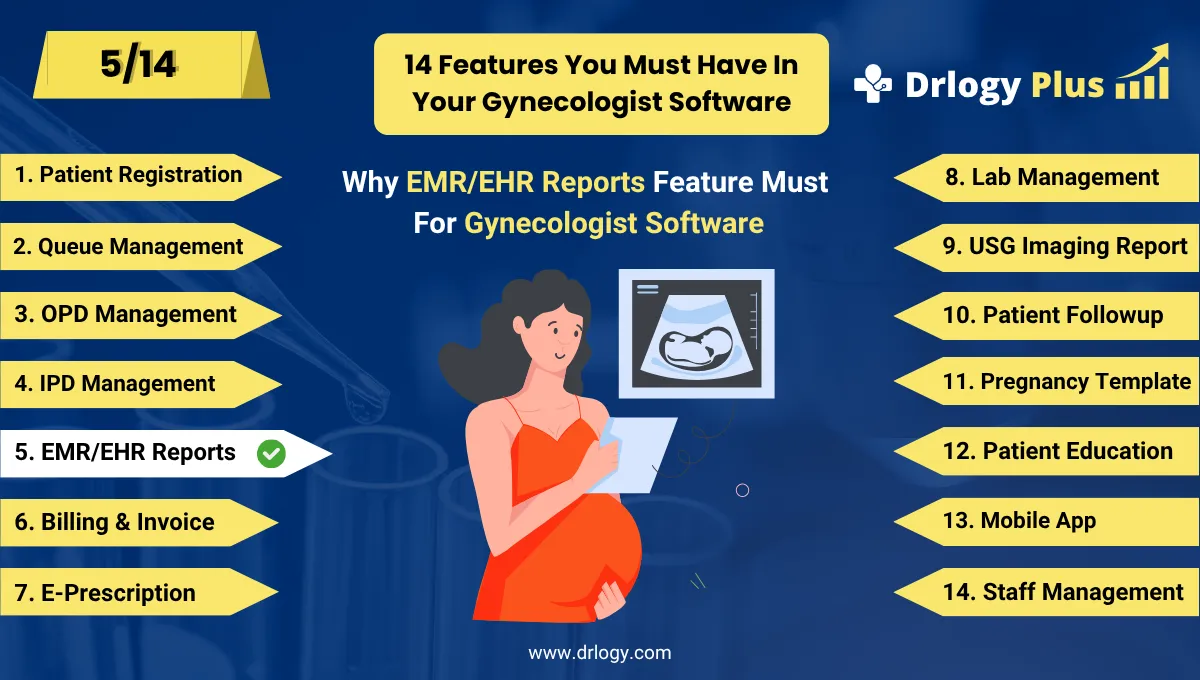
Here are 14 basic features for Drlogy Gynecologist Software.
| 1. EMR/EHR Report | 8. Lab Management |
| 2. Patient Queue Management | 9. USG & Imaging Report |
| 3. OPD Management | 10. Patient Followup |
| 4. IPD Management | 11. Patient Education |
| 5. EMR/EHR Reports | 12. Pregnancy Templates |
| 6. Billing & Invoice | 13. Mobile App |
| 7. Prescription Management | 14. Staff Management |
Summary
Overall, Reliable EMR/EHR systems empower gynecologists with complete, accessible patient histories.
Check Drlogy Gynecologist Software Features Guide to streamline clinic workflows, improve patient management for pregnant women, and enhance overall efficiency in gynecology practice.